
You wake up with your heart pounding, the lingering image of tiny feet scurrying across your floor still fresh in your mind.
A dream about mice can feel strangely unsettling, even though the creature itself is so small so why do these little animals show up in our sleep, and what are they trying to tell us?
Mice in dream meaning often point to small worries, hidden stress, or issues that feel minor but keep “nibbling” at your peace of mind.
Because mice are common, quick, and tied to strong emotions like fear, disgust, and even tenderness, the subconscious uses them as a vivid symbol for what’s happening beneath the surface of your waking life.
In this guide, you’ll explore psychological, cultural, and alternative interpretations, along with dozens of common mouse dream scenarios. Remember, dream symbols are deeply personal, so use this as a starting point for reflection.
The Symbolism of Mice: Understanding the Foundations

Before decoding specific dreams, it helps to understand what mice represent in the human imagination. Across folklore and everyday life, these tiny animals carry a surprisingly rich set of meanings.
Start with the simplest question: what is the mice dream meaning in plain terms? In most dream dictionaries, mice stand for small worries, quiet anxieties, or details you have been overlooking — and that is why the dream dictionary mice entry usually points to minor irritations rather than big crises. The same idea runs through the dream symbols mice are given in folklore: a tiny creature that gnaws away at the edges, much like a small problem that grows if ignored. Put together, the dream meaning of mice is usually about what is small but persistent in your life, while the dream meaning mouse (singular) often narrows to one specific worry, person, or habit. The dream meaning of mouse dreams also shifts with feeling — fear points to anxiety, while calm curiosity points to attentiveness — and the meaning of dreams mouse images carry is rarely about the animal itself. In the end, dreaming of mice meaning comes down to this: your mind is flagging something small that deserves attention before it becomes something bigger.
The mouse dream meaning is the same question people ask as mouse in dream meaning: what does it mean when a mouse shows up in your sleep? The meaning of mice in a dream is usually about worries, details, or problems that seem minor but multiply when ignored. A dream of mice, a dream of mouse, or a dream about a mouse all point the same way —
something small is asking for your attention. The dream meaning mice carry is rarely about the animal itself, and a dream of mice meaning can shift when rats appear too: dreaming about mice and rats often means the same small worries, just louder and harder to ignore.
Dreaming with mice, or a dream with mice, is often about small worries — and the dream meaning of a mouse, a dream about mice meaning, a dream of a mouse meaning, or a dream of mouse meaning all point to the same thing: hidden stress that keeps nibbling away. Mice in dream meaning often point to small worries, hidden stress, or issues that feel minor but keep growing — and your subconscious may be asking you to face them before they spread.
If you have been searching for dreaming mice meaning, you are probably wondering what a small, scurrying mouse is trying to tell you. In dream interpretation, mice often stand for small worries, quiet fears, or details you have been overlooking — the kind of little things that gnaw at you until you notice them. People looking up dreaming with mice meaning, or asking what does it mean to dream with a mouse, usually find the same message: a mouse in a dream is rarely about the animal itself, and more about feeling small, overlooked, or nibbled away at by everyday stress. A dream dictionary mouse entry will often add the same note — that mice can also point to resourcefulness and survival, since they find a way through the smallest cracks, just as you might need to.
What Mice Represent
On the positive side, mice symbolize resourcefulness, adaptability, and survival. They thrive in almost any environment, slip through the smallest gaps, and find food where others would not. In many traditions, they also stand for humility, attention to detail, and quiet persistence.
On the negative side, mice suggest vulnerability, timidity, and intrusion. As household pests, they are linked to contamination, loss of control, and secrets hidden inside the walls. Their rapid breeding also connects them to problems that multiply when ignored.
Why the Subconscious Chooses Mice
Your mind often picks symbols that match how a feeling behaves. Mice fit this role for several reasons:
- Scale: They reflect worries that seem small but quietly spread.
- Setting: Mice invade homes, so they often mirror concerns about personal boundaries, security, and privacy.
- Emotion: They trigger an instant startle response, disgust, or sometimes tenderness, which gives the dream its emotional charge.
Positive vs. Negative Symbolism
Neither reading is “correct” on its own. A mouse scurrying out of sight may signal a problem you are avoiding, while a calm mouse in your hand could point to comfort with your own vulnerability. The setting, your emotions, and what is happening in your waking life all shape the meaning.
Psychological Interpretations of Mice in Dreams

Psychologists have approached dream symbols from several angles, and each offers a different lens for understanding why mice appear in your sleep.
Freudian View
Sigmund Freud saw dreams as a window into repressed fears and desires, with everyday objects standing in for hidden emotions. In this tradition, a mouse might represent something anxious or shameful you would rather not face. Many of Freud’s specific symbol readings are now considered dated and difficult to test, so treat them as historical perspective rather than fact.
Jungian View
Carl Jung believed dream images reflect the unconscious mind, including the “shadow,” the parts of ourselves we overlook or reject. A mouse may symbolize a small, neglected piece of your personality, such as a fear, a talent, or a need that deserves attention.
Gestalt View
Gestalt therapy suggests that every element in a dream is a part of you. Instead of asking what a mouse means in general, you might ask: “What would it feel like to be this mouse? What is it afraid of, or searching for?”
Modern Sleep Science
Researchers have proposed several theories that shape how dreams are understood today:
- Continuity hypothesis: Dreams often reflect your waking concerns, so stress at work or home can surface as mice.
- Threat simulation theory: Dreams may rehearse responses to danger, which could explain startling animal encounters.
- Emotional processing: During REM sleep, the brain works through feelings from the day, often in symbolic form.
The Limits of Interpretation
Dream science is still evolving, and no one can say with certainty what a specific symbol means. Use these frameworks as prompts for self-reflection, not as diagnoses or predictions.
Mice Dream Scenarios by Action: Your Actions and the Mouse’s

What you do in the dream, or what the mouse does, often says more than the mouse itself. Each scenario below includes its likely meaning, its emotional tone, and a question for reflection.
Seeing a mouse in a dream is the most common version of this dream, and the seeing mouse in dream meaning depends on what the mouse was doing. If it was simply passing through, the meaning of dreaming of a mouse is usually a small worry you have noticed but not yet addressed — so ask yourself what minor problem you are overlooking.
1. Seeing a Mouse
Meaning: A small worry or irritation you have noticed but not yet addressed.
Tone: Uneasy or curious.
Ask yourself: What minor problem am I overlooking?
2. Being Chased by a Mouse
Meaning: Avoidance. A small issue may be growing because you keep running from it.
Tone: Anxious, pressured.
Ask yourself: What am I trying not to deal with?
3. Chasing a Mouse
Meaning: A desire to regain control or resolve a nagging concern.
Tone: Determined, sometimes frustrated.
Ask yourself: What am I trying to fix or catch up with?
4. Catching a Mouse
Meaning: Taking charge of a problem, whether by hand or in a trap. It often signals confidence or relief.
Tone: Empowered.
Ask yourself: What challenge have I recently begun to master?
5. Killing a Mouse
Meaning: Confronting and ending a persistent worry, though it can also reflect guilt or an overly harsh response to a small issue.
Tone: Relief or regret.
Ask yourself: Am I dealing with this problem proportionately?
6. Being Bitten by a Mouse
Meaning: A small hurt, criticism, or betrayal that stings more than expected.
Tone: Shock, irritation.
Ask yourself: Who or what has recently “nipped” at my confidence?
Mice Dream Scenarios by Action: Crawling on Your Body

7. Mice Crawling on Your Body
Meaning: Feeling overwhelmed, drained, or “infested” by small demands and stresses that you cannot shake off.
Tone: Disgust, panic.
Ask yourself: What is draining my energy a little at a time?
8. A Mouse Running Over Your Feet
Meaning: Instability or a sudden disruption to your footing in life, often tied to plans, finances, or direction.
Tone: Startled, off-balance.
Ask yourself: Where do I feel unsteady right now?
9. Mice in Your Hair or Clothing
Meaning: Intrusion into your personal identity or self-image. It may reflect self-consciousness or worry about how others see you.
Tone: Embarrassed, violated.
Ask yourself: Where do I feel exposed or judged?
10. Feeding a Mouse
Meaning: Nurturing something small, whether a new idea, a vulnerable person, or even a worry you are unintentionally encouraging to grow.
Tone: Caring, sometimes uncertain.
Ask yourself: What am I giving my energy to, and is it helping?
11. Holding or Petting a Mouse
Meaning: Comfort with your own vulnerability, or acceptance of a fear you once found unsettling. It is often a positive sign of emotional growth.
Tone: Calm, tender.
Ask yourself: What fear have I become more at peace with?
12. Mice Escaping or Hiding
Meaning: A problem that slips out of reach or remains hidden. You may sense something is wrong without knowing the source.
Tone: Frustrated, suspicious.
Ask yourself: What might I be missing beneath the surface?
Mice Dream Scenarios by Action: Eating Your Food

13. Mice Eating Your Food
Meaning: A sense that something is quietly taking your resources, whether time, money, energy, or attention. It can also point to worry about scarcity.
Tone: Annoyed, protective.
Ask yourself: What is taking more than its fair share from me?
14. Mice Chewing Through Objects, Wires, or Clothes
Meaning: Gradual damage to something you rely on, such as a relationship, routine, or sense of security. Chewed wires may hint at communication breaking down.
Tone: Anxious, helpless.
Ask yourself: What in my life is slowly wearing thin?
15. Hearing Mice Squeak or Scratch
Meaning: A warning from your subconscious. Something is present but unseen, such as an unspoken tension or a worry you have not yet named.
Tone: Tense, on edge.
Ask yourself: What do I sense but cannot yet see clearly?
16. Being Afraid of a Mouse vs. Feeling Calm Around It
Meaning: Your reaction matters more than the mouse. Fear suggests avoidance of a small but real concern, while calm suggests you are handling it well or have made peace with it.
Tone: Fearful or at ease.
Ask yourself: Does my reaction match the size of the problem?
17. Rescuing a Mouse
Meaning: Compassion and protectiveness toward something vulnerable, in others or in yourself. It may also reflect a desire to help someone who seems overlooked.
Tone: Warm, responsible.
Ask yourself: Who or what needs my care right now?
18. A Mouse Speaking or Behaving Like a Person
Meaning: A message from your inner voice, or a part of you that has been ignored. It may also suggest you are underestimating someone or something small but significant.
Tone: Curious, surreal.
Ask yourself: What is this “small voice” trying to say?
Mice Dream Scenarios by Setting

Where the mice appear can reveal which area of your life the dream is pointing to. Each setting carries its own symbolic weight.
Mice in Your Bedroom
Meaning: Concerns about intimacy, rest, or privacy. Your bedroom is your most personal space, so mice here may signal stress that is disturbing your peace or a worry you carry to bed.
Mice in the Kitchen
Meaning: Anxiety about nourishment, finances, or household stability. It can also reflect a feeling that your resources are being quietly depleted.
Mice in the Bathroom
Meaning: A need to cleanse yourself of something, such as guilt, stress, or an unresolved emotion. It may also point to feeling vulnerable or exposed.
Mice in the Workplace
Meaning: Small frustrations, office politics, or a sense that minor issues are undermining your performance. It may also suggest worrying about a coworker’s behavior.
Mice in Your Car
Meaning: Unease about your life’s direction or your sense of control. Because a car represents your path forward, mice here may hint at small obstacles slowing your progress.
Mice in Your Childhood Home
Meaning: Old fears or unresolved memories resurfacing. This setting often links the dream to early experiences, family dynamics, or a past insecurity that still influences you.
Mice Outdoors or in a Field
Meaning: Often a gentler reading. Mice in open spaces can suggest natural cycles, new opportunities, or small matters that are part of life’s flow rather than a threat.
Mice in Someone Else’s Home
Meaning: Concern about another person’s hidden problems, or a worry that their troubles may affect you. It can also reflect judgment or curiosity about how others live.
Mice Dream Scenarios by Type, Color, and Number

The details of the mouse itself, including its color, condition, and how many appear, add another layer of meaning.
Color
- White mouse: Purity, new beginnings, or a feeling of being “tested,” like a lab subject.
- Black mouse: Hidden fears, suppressed emotions, or something you would rather not examine.
- Grey mouse: Uncertainty or a situation without clear answers.
- Brown mouse: Grounded, everyday worries tied to home, work, or routine.
- Unusually colored mouse (pink, blue, and so on): Imagination, or an emotion that does not fit neatly into one category.
Condition
- Dead mouse: The end of a worry, or a sense of loss or closure.
- Injured or sick mouse: Concern for someone vulnerable, or a feeling that part of you needs healing.
- Baby mice: New, small beginnings, or worries that are just starting to form.
- Giant mouse: A minor issue that has grown out of proportion.
Number
- A single mouse: One specific, isolated concern.
- A few mice: Several small irritations building up.
- A swarm or infestation: Feeling overwhelmed by many pressures at once.
Mouse vs. Rat
| Mouse | Rat | |
| Size of issue | Small, nagging worries | Larger threats |
| Common theme | Vulnerability, irritation | Betrayal, deceit |
| Emotional tone | Unease | Disgust, distrust |
Pet and Lab Mice
A pet mouse suggests nurturing, comfort, or care for something delicate. A lab mouse may reflect feeling observed, evaluated, or stuck in a routine you did not choose.
Mice Dreams by Life Context

Mice often appear when a specific area of your life is under quiet strain. Considering your current circumstances can help narrow down the meaning.
Relationships and Romance
Mice may point to small distrust, jealousy, or a minor betrayal. A mouse hiding in the home can reflect something unspoken between partners, while a calm mouse may suggest growing comfort and honesty.
Family and Home Life
Dreams of mice in family settings often reflect household tension, unresolved conflicts, or worry about protecting loved ones. They may also signal that minor disagreements are piling up.
Work, Career, and Money
Small leaks in your finances, nagging deadlines, or workplace frustrations can surface as mice. Mice eating food or chewing through objects often connect to a fear of slowly losing resources.
Health and the Body
Feeling drained, anxious, or run down may appear as mice crawling on you or nibbling at your belongings. These dreams can reflect stress affecting your body, though they are not a medical sign. If you have health concerns, speak with a professional.
Pregnancy Dreams
Mice dreams are commonly reported during pregnancy. They may reflect heightened anxiety, protectiveness, and the many small worries that come with preparing for a baby. Hormonal changes and vivid dreaming during this time also play a role.
Major Life Transitions and Moving
Starting a new job, moving, or ending a relationship can bring up feelings of vulnerability. Mice in a new home may mirror uncertainty about whether you feel safe and settled.
Grief and Loss
Mice can appear during mourning as symbols of fragility, lingering sadness, or small reminders of the person you miss. A dead mouse may represent closure, or the difficult process of letting go.
Emotions in the Dream: Reading the Feeling, Not Just the Symbol

Two people can dream of the same mouse and wake with completely different meanings. The difference is often the emotion they felt. Paying attention to your feelings can be more revealing than analyzing the animal itself.
Fear and Disgust
Strong fear or revulsion often points to avoidance. You may be sidestepping a small but real problem, hoping it will disappear on its own. The intensity of the feeling can show how much energy you are spending to keep it out of view.
Calm or Affection
Feeling peaceful or even tender toward a mouse suggests comfort with your own vulnerability. It may mean you have accepted a worry you once resisted, or that you are handling a challenge with confidence.
Anger
Anger usually signals a violated boundary. If a mouse invades your space and you feel furious, ask who or what is crossing a line in your waking life, and whether you have said so out loud.
Curiosity
Watching a mouse with interest rather than alarm suggests readiness to examine something you have overlooked. Your subconscious may be inviting you to look closer instead of looking away.
Why Emotion Often Matters More Than the Symbol

Symbols are flexible, but feelings are specific to you. A dead mouse can bring relief to one dreamer and sorrow to another. When you review a dream, try asking:
- What was the strongest emotion I felt?
- Where do I feel that same emotion in my waking life?
- Did the feeling change by the end of the dream?
Answering these questions often leads to a more personal and accurate interpretation than any dream dictionary can offer.
Cultural, Religious, and Alternative Perspectives
Interpretations of mice vary widely between traditions, and no single view is universal. The summaries below are general overviews, and individual beliefs differ even within the same culture or faith.
Chinese Culture
In Chinese tradition, the Rat (often translated as Mouse) is the first animal of the zodiac. It symbolizes cleverness, resourcefulness, and prosperity. Dreaming of a mouse may be read as a sign of financial opportunity or quick thinking.
Hindu Tradition
Mushika, the mouse, serves as the vehicle of Ganesha. Because Ganesha rides the mouse, it is often seen as representing the mastery of desire, ego, and restlessness. A mouse in a dream may point to small impulses you are learning to control.
Christian and Biblical Imagery
Rodents appear in scripture mostly in contexts of plague, uncleanness, or loss. Some dreamers read mice as a warning about hidden sin or small compromises. Others focus on themes of humility and God’s care for the smallest creatures.
Islamic Dream Interpretation
Classical interpretation traditions vary among scholars. Some associate mice with a deceptive or petty person, while others connect them to small troubles or minor sources of harm. Context and the dreamer’s character are usually considered important.
Native American and Folk Traditions
In many Indigenous traditions, Mouse is a teacher of detail, observation, and humility. It may encourage you to notice small things and pay attention to your surroundings. Meanings differ widely between nations, so avoid treating them as one belief.
Ancient Greek and Egyptian References
In ancient Greece, mice were linked to Apollo and sometimes to healing and prophecy. In Egypt, they were associated with both pest-related loss and, at times, protection, depending on the context.
Alternative Animal and Totem Views
As a alternative animal, the mouse is often said to represent attention to detail, caution, and quiet resilience.
Good Omen or Bad Omen?

The most common question about mice dreams is also the hardest to answer in one word. A mouse is not inherently lucky or unlucky. The meaning depends on the context, your emotions, and how the dream ends.
Common Positive Readings
- Resourcefulness: You are adapting well or finding creative solutions.
- Small wins: Minor efforts are starting to pay off.
- New opportunities: A modest beginning may grow into something larger.
- Acceptance: Feeling calm around a mouse often signals emotional growth.
Common Negative Readings
- Hidden stress: Small worries are building beneath the surface.
- Deception: A petty betrayal or dishonesty may be present.
- Minor losses: Resources, energy, or time may be quietly draining away.
- Avoidance: A problem is growing because it has not been faced.
A Simple Self-Check
Ask yourself these questions to lean toward a more positive or negative reading:
- How did I feel? Calm or curious usually leans positive. Fearful or angry leans negative.
- Who had control? If you caught, rescued, or ignored the mouse comfortably, the tone is often hopeful. If the mouse overwhelmed you, it may point to stress.
- How did the dream end? Resolution suggests progress. Escalation suggests something needs attention.
- What is happening in my life now? Match the dream to a current worry or opportunity.
A Note on Prediction
Dreams reflect your inner state rather than foretell the future. Even a “negative” mouse dream is better seen as a prompt to address a small concern early, before it grows.
How to Interpret Your Own Mouse Dream: Step-by-Step

Dream dictionaries are a useful starting point, but your own life is the best key. Follow these steps to turn a mouse dream into a meaningful insight.
Step 1: Write It Down Immediately
Dream details fade within minutes of waking. Keep a notebook or notes app beside your bed and record whatever you remember, even fragments. Write in the present tense, as if it is still happening.
Step 2: Record the Details
Note the setting, the number and color of the mice, what you and the mouse did, and any other people present. Small details often hold the clearest clues.
Step 3: Name Your Emotions
Write down how you felt during the dream and when you woke up. As covered earlier, the feeling often matters more than the symbol.
Step 4: Identify What Is “Small but Persistent”
Ask what minor irritation, worry, or demand in your life keeps returning. Mice often point to issues that seem too small to address but are quietly draining you.
Step 5: Ask the Key Questions
- What did the mouse want or do?
- Where in my life do I feel the same emotion?
- What have I been avoiding or underestimating?
- Did anything change by the end of the dream?
Step 6: Look for Patterns
One dream may be random. Several dreams over weeks can reveal a theme. Review your journal for repeated settings, emotions, or scenarios.
Step 7: Rule Out Simple Causes
Not every dream is symbolic. Late meals, stress, a scary movie, medication, or even hearing a real noise can shape dream content. Consider these before reading deeper meaning into the dream.
Recurring Mouse Dreams and Nightmares

Dreaming of mice once is common. Dreaming of them again and again can feel unsettling, and it usually means your mind is asking for attention.
Why Dreams Repeat
Recurring dreams often tie to an unresolved concern. If a small worry, tension, or fear keeps getting pushed aside, the subconscious may keep returning to it. Ongoing stress, major life changes, and unprocessed emotions are frequent triggers.
What Recurring Themes May Point To
Look for what stays the same each time. Repeated mice in the home may highlight a lingering worry about security or boundaries. Repeated chases may point to a pattern of avoidance. If the dream changes as your life changes, that can be a sign you are making progress.
Practical Steps
- Reduce daily stress: Walking, stretching, breathing exercises, or journaling before bed can lower tension.
- Improve sleep hygiene: Keep a regular schedule, limit caffeine and alcohol late in the day, and avoid screens before sleep.
- Address the underlying issue: Once you identify the “small but persistent” concern, take one small action toward resolving it.
- Try imagery rehearsal: While awake, rewrite the dream with a calmer ending, such as the mouse leaving peacefully, and rehearse it mentally for a few minutes each day. This technique is commonly used for recurring nightmares.
When to Talk to a Professional
Occasional unsettling dreams are normal. Consider speaking with a doctor or therapist if nightmares happen frequently, disrupt your sleep, or leave you anxious during the day. Persistent distress deserves support, and a professional can help identify causes and suggest effective treatment.
When You Actually Have Mice: Real-Life Overlap
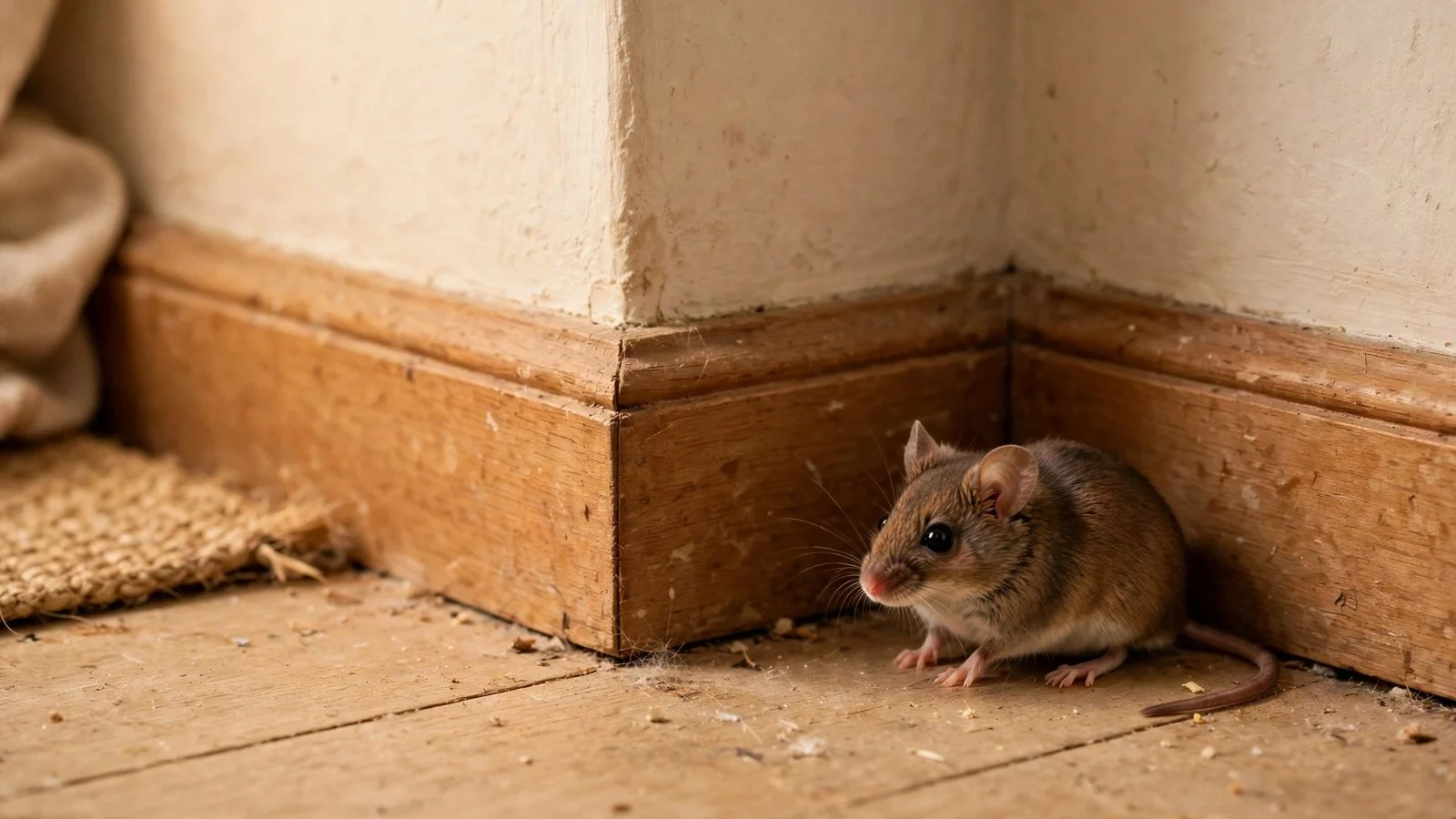
Not every mouse dream is symbolic. Sometimes the simplest explanation is that mice are actually nearby, and your sleeping brain is responding to what it senses.
Can a Real Infestation Influence Your Dreams?
Yes, it can. Sleeping minds continue to process sound, smell, and recent experience. If you have heard scratching in the walls, noticed droppings, or even just worried about a possible pest problem, those impressions can slip into your dreams. This fits the continuity idea discussed earlier: what occupies you by day often shapes what you see at night.
Symbolism or a Genuine Pest Problem?
Ask yourself a few quick questions:
- Have I seen or heard signs of mice recently? Droppings, gnaw marks, nesting material, or nighttime noises are common clues.
- Did the dream begin after a real encounter? A recent sighting often explains a sudden run of mouse dreams.
- Do the dreams stop when the problem is resolved? If they fade after you deal with a real infestation, the cause was likely literal.
- Is there no physical evidence at all? Then a symbolic reading may be more fitting.
What to Do If the Signs Are Real
Look for entry points, store food in sealed containers, and clean up crumbs. Traps or a licensed pest control professional can help if the problem persists. Mice can carry germs and damage wiring, so address a real infestation promptly rather than treating it only as a dream message.
Keep Both Possibilities Open
A real problem and a symbolic one can overlap. Dealing with the physical mice may even ease the stress that fueled the dreams.
Mouse Dreams in Pop Culture and Literature

Mice have been storytelling favorites for centuries, which helps explain why they feel so familiar when they show up in our dreams. The image of a small, easily overlooked creature facing a big world is one of the most enduring in human culture.
Mice in Fables and Folklore
Aesop’s fable of the lion and the mouse is among the best-known examples. In it, a tiny mouse frees a mighty lion from a net, showing that the smallest and most underestimated beings can have real power. This idea echoes in mouse dreams that suggest you may be underestimating something small but significant, in the world or in yourself.
Mice in Children’s Stories and Animation
From picture books to animated films, mice are often shown as clever, brave, and lovable underdogs. Many people grow up with warm associations with these characters, which may explain why some mouse dreams feel tender or comforting rather than frightening. Your personal history with these stories can quietly shape how a mouse appears in your dreams.
Mice as Symbols of Vulnerability and Survival
Writers have long used mice to represent fragility, quiet persistence, and the struggles of ordinary life. They can stand for the powerless, the overlooked, or those who survive by wit rather than strength.
Why the Image Endures
A mouse is small enough to feel vulnerable, yet resourceful enough to thrive almost anywhere. That tension between weakness and resilience makes it a flexible symbol, which is exactly why the subconscious keeps returning to it.
Frequently Asked Questions
Is dreaming of mice good or bad?
Neither by default. Mice often reflect small worries, but they can also symbolize resourcefulness. Your emotions in the dream and your current life circumstances decide the tone.
What does it mean to dream of a mouse in your house?
It usually points to a hidden or minor concern affecting your sense of security, privacy, or personal boundaries.
What does it mean when a mouse bites you in a dream?
Often a small hurt, criticism, or betrayal that stings more than expected.
What does a white mouse symbolize?
Purity and new beginnings, or a feeling of being tested or observed.
Do mouse dreams predict the future?
No evidence supports this. Dreams mainly reflect your thoughts, emotions, and experiences, so treat them as prompts for reflection.
What is the difference between dreaming of mice and rats?
Mice usually symbolize small, nagging worries, while rats tend to represent larger threats, betrayal, or distrust.
Why do I keep dreaming about mice?
Recurring dreams often signal an unresolved concern. Look for a small but persistent issue in your life that you may be avoiding.
Can stress cause dreams about mice?
Yes. Stress and anxiety strongly shape dream content, and mice are a common symbol for minor stressors that build up.
What does killing a mouse in a dream mean?
Confronting and ending a worry, though it may also reflect guilt or an overly harsh response to a small problem.
What does a dead mouse mean in a dream?
The end of a concern, closure, or a sense of loss, depending on how you felt.
What does it mean to dream of a mouse in your bed?
A mouse in your bed often means a small worry has entered your most private space — the place where you rest and feel safe. It can point to a nagging concern that follows you even into sleep, or a boundary that needs attention at home. The dream is usually a gentle prompt to deal with the small issue before it grows.
Conclusion
Dreaming of mice can feel unsettling, but it rarely signals something dramatic. More often, mice in dream meaning point to small, persistent concerns: a nagging worry, a quiet drain on your energy, or a problem you have been avoiding.
Across psychology, culture, and alternative traditions, the mouse remains a symbol of both vulnerability and resourcefulness.
The most useful step is to approach your dream with curiosity rather than fear. Notice your emotions, consider the setting, and ask what small issue in your waking life deserves attention.
Keeping a dream journal can reveal patterns that no dictionary can. And if your dreams cause ongoing distress, a doctor or therapist can help.
Have you dreamed about mice recently? Share your dream in the comments below, or subscribe for more guides on dream symbolism and interpretation.

Robert Moss is a renowned dream researcher, author, and teacher known for exploring dreams, spirituality, and their deeper meanings. At DreamHatchs.com, we share insights inspired by his work to help readers understand their dreams.








4 thoughts on “Mice Dream Interpretation: Different Scenarios and Their Meanings”