You jolt awake, heart pounding, the memory of rough hands, a dark vehicle, or a locked room still fresh in your mind.
This is the kidnapping dream meaning: your subconscious is showing you where you feel trapped or powerless.
For a few seconds, it feels completely real. Then relief sets in: it was only a dream. But the unease often lingers long after.
If you’re searching for a kidnapping dream meaning, you’re far from alone. These dreams are surprisingly common, and they are almost never literal.
Instead, they tend to reflect deeper emotions such as stress, loss of control, fear of betrayal, or feeling trapped in some part of your life if you were the victim, the rescuer, or a bystander, the details matter.
In this guide, you’ll learn why kidnapping dreams happen, what different scenarios may symbolize, how psychology and various cultural traditions interpret them, and what you can do to feel calmer afterward.
Keep in mind that dream interpretation is personal and subjective, not a prediction of future events.
Kidnapping Dream Meaning:

The Quick Answer
In short: A kidnapping dream usually reflects loss of control, fear, stress, or feeling trapped in some area of your waking life. It rarely predicts a real event. The exact meaning depends on who took you, where you were, how the dream ended, and, most importantly, how you felt while it was happening. In brief, that is the kidnapping dream meaning: your fears about control, dramatised.
Think of the dream as your mind’s dramatic shorthand. Real kidnapping is one of the most extreme ways of having your freedom taken away, so the brain borrows that imagery when you feel powerless in everyday situations. A demanding job, a controlling relationship, financial pressure, or a major life change you didn’t choose can all trigger it.
Four factors shape the interpretation:
- The captor: a stranger, a loved one, or a faceless figure each point to different sources of tension.
- The scenario: being taken, escaping, or watching someone else get kidnapped carry different emotional messages.
- Your emotions: terror, numbness, and calm suggest very different things.
- Your current life: the dream almost always connects to what you’re dealing with right now.
This is why no single definition fits everyone, and why dream dictionaries that offer one fixed answer often miss the point. The same plot can mean something entirely different for two people.
The sections below break down each element so you can find the interpretation that best fits your own dream.
Why Do We Have Kidnapping Dreams?
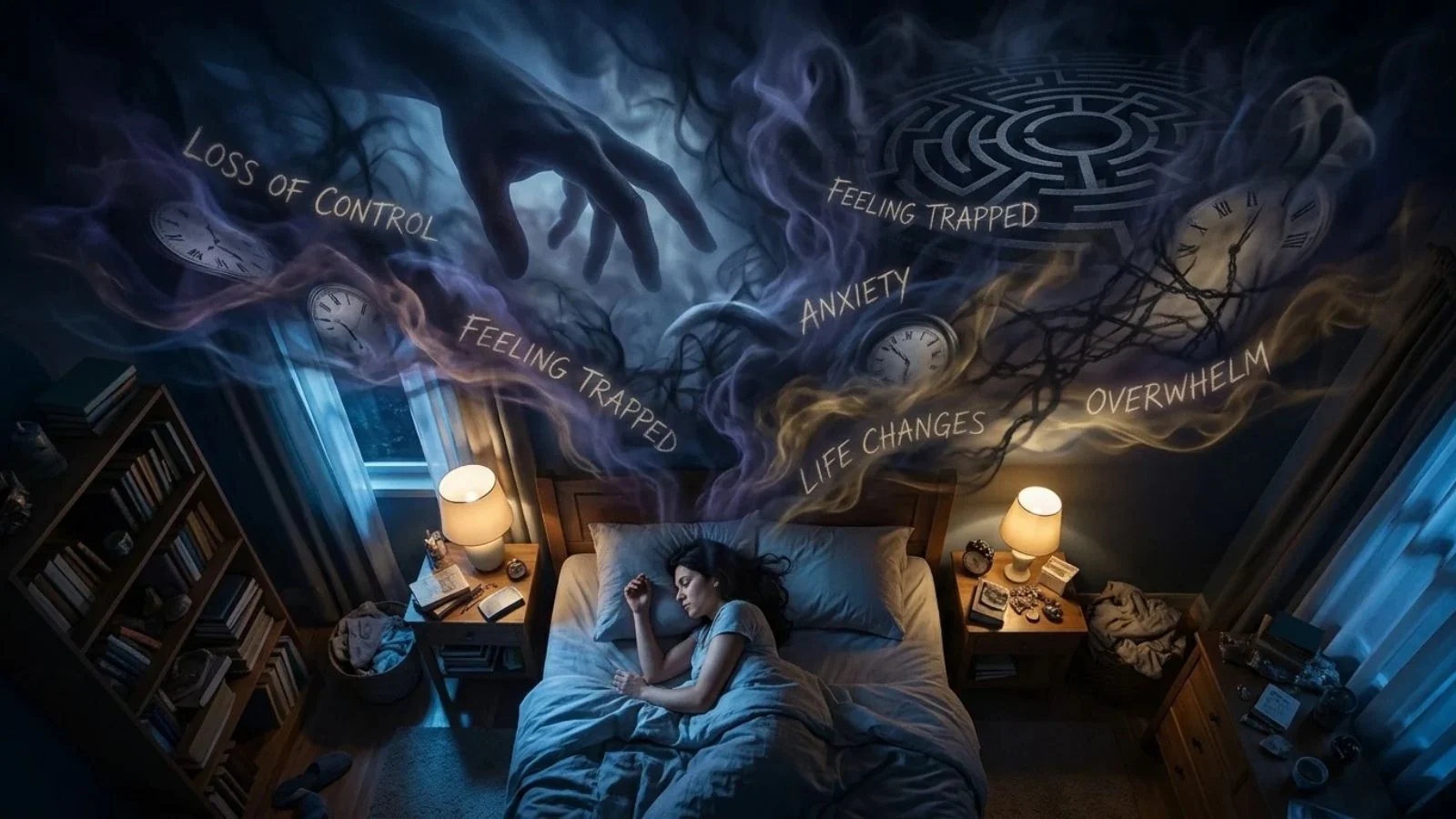
Dreams are the brain’s way of working through emotion while the body rests. Most vivid dreaming happens during REM sleep, when the areas of the brain tied to emotion and fear are highly active, while the logical, planning part of the mind is quieter. That combination is why dreams can feel intense and strange at the same time. Your brain takes abstract feelings like anxiety or helplessness and turns them into dramatic, visual stories.
Dreams about being kidnapped are among the most common anxiety dreams, and a dream of being kidnapped usually means you feel trapped or powerless in some part of your waking life. A dream about getting kidnapped can point to the same feeling — getting kidnapped in a dream often reflects a loss of control, whether that is a relationship, a job, or a decision someone else seems to be making for you.
Waking-life stress. The most common trigger is pressure you may not have fully acknowledged: a demanding boss, family expectations, money worries, a difficult relationship, or a big change such as moving, marriage, or a new baby. When you feel boxed in by circumstances, your mind may express it as being taken against your will.
Media and real-world influences. News stories, crime shows, thrillers, true crime podcasts, and even social media posts about missing persons can lodge in your memory. The brain often replays this material at night, especially if you watched or read it shortly before bed.
Physical and lifestyle factors. Poor sleep, irregular schedules, heavy meals late at night, alcohol, caffeine, and certain medications can make dreams more vivid and disturbing. Illness or fever can have a similar effect.
Past experiences. Memories of feeling unsafe, controlled, or abandoned, particularly from childhood, may resurface in symbolic form. If these dreams are frequent and distressing, it can be a sign that something deserves attention.
Core Symbolism of Kidnapping in Dreams

Kidnapping is a powerful symbol because it combines several of our deepest fears: losing freedom, losing safety, and losing the people or parts of life we hold dear. Here are the most common themes dreamers and interpreters point to.
Loss of control and powerlessness. This is the most widely cited meaning. If decisions at work, at home, or in a relationship are being made for you, your mind may dramatize that helplessness as being taken against your will.
Feeling trapped or restricted. A kidnapping can mirror a job you can’t leave, a commitment that feels suffocating, or expectations you feel unable to escape.
Fear of betrayal and trust issues. Kidnappers often act through deception or sudden ambush. Dreaming of this may reflect suspicion toward someone close, or a past hurt that still makes trust feel risky.
Being pulled off your path. Some interpreters see kidnapping as a symbol of outside forces, such as pressure from family, society, or circumstances, steering you away from the life you want.
Suppressed emotions or “lost” parts of yourself. From a psychological view, the kidnapper may represent feelings you’ve pushed down, such as anger, grief, or ambition, which now demand attention.
Fear of abandonment or separation. Dreams in which a loved one is taken often point to anxiety about losing that person or the connection you share.
Vulnerability and weak boundaries. If you often say yes when you mean no, the dream may highlight how easily others can “take” your time, energy, or peace.
None of these meanings is automatic. The most accurate reading is the one that matches what you feel and what is happening in your life right now.
Who Is the Kidnapper? What the Captor Represents

In many kidnapping dreams, the identity of the captor says more than the kidnapping itself. The person or figure who takes you often stands for the source of your stress, fear, or loss of control.
A stranger. A kidnapper you don’t know usually symbolizes fear of the unknown: an unexpected change, an uncertain future, or a threat you can’t clearly name.
Someone you know. If the captor is a friend, coworker, or acquaintance, the dream may point to tension, mistrust, or pressure in that relationship. Ask yourself whether this person tends to dominate your time or decisions.
A family member or partner. This often reflects control dynamics, emotional dependence, or feeling smothered by someone close. It doesn’t mean the person is dangerous. It may simply mirror a sense that your choices aren’t fully your own.
A boss or authority figure. Dreams like this commonly appear during workplace pressure, burnout, or when you feel micromanaged or trapped in a role.
A faceless or shadowy figure. Psychologists often link this to anxiety without a clear cause, or to the “shadow self,” the hidden emotions and traits you haven’t acknowledged.
Multiple kidnappers. A group of captors can signal overwhelming demands coming from several directions at once, such as work, family, and finances.
Your reaction matters. Fear toward the captor suggests real stress around what they represent. Calm or even familiarity may suggest the “captor” is a part of life you have quietly accepted, or a change you’re secretly ready for. Anger may point to a wish to reclaim control.
Common Kidnapping Dream Scenarios and Meanings: Being the Victim

Dreaming that you are the one taken is the most common version, and the details change the message.
Being kidnapped. A general kidnapping dream usually points to loss of control. Ask where in your life decisions are being made for you.
Being kidnapped from home. Home represents safety and identity. This version may reflect feeling invaded, whether by family demands, conflict, or a lack of privacy.
Being kidnapped from a public place. This often relates to fear of exposure or feeling unprotected in the outside world, such as at work or school.
Being kidnapped by someone you know. This can highlight mistrust or hidden tension in that relationship. Consider whether that person pressures or manipulates you.
Being kidnapped by a stranger. Often tied to fear of sudden change or an unknown threat you can’t name.
Being held for ransom. Ransom suggests something is being demanded of you, such as money, time, or emotional energy, before you can feel free.
Being tied up or locked in a room. These images reflect feeling stuck, silenced, or restricted, often in a job, relationship, or habit.
Being taken abroad or far away. This may symbolize fear of losing your roots, or a major life change pulling you away from what feels familiar.
Being taken in a car or van. A moving vehicle suggests life is carrying you somewhere without your consent, with no control over direction or speed.
Being drugged or knocked out first. This can signal feeling numb, overwhelmed, or unaware of how much influence others have over you.
For each version, reflect on one question: what in my waking life feels like it’s being decided without me?
Common Kidnapping Dream Scenarios and Meanings: Escape and Resolution

How the dream ends often matters as much as how it begins. Escape scenarios tend to reveal how you see your own ability to cope.
Escaping a kidnapper. This is generally a positive sign. It suggests you are finding the strength, or the wish, to break free from a stressful situation, even if you haven’t consciously decided to yet. Note how you escaped: running, outsmarting, or being helped.
Being rescued by someone. If another person saves you, ask who they are. The dream may show that you need support, or that someone in your life is a source of safety. It can also hint that you feel unable to solve a problem alone.
Fighting back against a kidnapper. Standing up to your captor often reflects growing confidence, anger that is ready to be expressed, or a desire to set firmer boundaries.
Hiding from kidnappers. Hiding suggests avoidance. You may be dodging a conflict, responsibility, or emotion you aren’t ready to face.
Being unable to scream or move. This is one of the most distressing versions. It often mirrors feeling voiceless or powerless in waking life, such as not being able to speak up at work or at home. It can also be linked to sleep paralysis, a temporary state where the brain wakes before the body does. If this happens often, it’s worth mentioning to a doctor.
Waking up before the outcome. An unresolved ending usually reflects an unresolved worry. The mind is still working on it.
Escape dreams often appear when you are close to a turning point. They can be a quiet signal that part of you already knows you can cope.
Common Kidnapping Dream Scenarios and Meanings: Others Being Kidnapped

Dreaming that someone else is taken is often more upsetting than dreaming about yourself, because the fear is for someone you care about.
A child being kidnapped. This usually reflects protectiveness and anxiety about responsibility, especially for parents or caregivers. It can also symbolize a vulnerable, innocent part of yourself that feels unprotected.
Your own child being kidnapped. Common among new and expecting parents, this dream is rooted in worry about safety and the fear of losing them. It rarely predicts danger. It may also appear when your child is growing more independent and you feel them drifting away.
A partner or spouse being kidnapped. This can point to fear of losing the relationship, emotional distance, or feeling unable to reach someone you love.
A parent or sibling being kidnapped. Often tied to worry about their health, a family conflict, or the changing role that person plays in your life.
A friend being kidnapped. This may signal concern about that friend’s wellbeing, or a fear that the friendship is slipping away.
A pet being kidnapped. Pets represent comfort and unconditional love. This dream may reflect anxiety about losing a source of emotional security.
Witnessing a kidnapping. Watching without acting often suggests helplessness about a situation you can see but feel unable to change, perhaps a problem affecting someone around you.
In each case, ask yourself: who is this person to me, and what worry do I have about them right now? If you felt guilt for not helping, that may point to a wish to be more present or supportive in waking life.
Common Kidnapping Dream Scenarios and Meanings: Being the Kidnapper

Dreaming that you are the one doing the kidnapping can feel deeply unsettling, and many people wake up feeling guilty or confused. Rest assured, this dream does not reveal a hidden dark side or a wish to harm anyone. It is almost always symbolic.
Kidnapping someone. This often reflects a strong need for control, or a fear of losing something you feel slipping away. Ask yourself whether you have been trying to hold on too tightly to a situation, a decision, or a person.
Kidnapping a child. Here the “child” may represent your own inner child, or a younger, more playful part of yourself you wish to protect or reclaim. It can also point to a longing for innocence, or an unmet need for care that you are trying to fulfill. If a real child appears, the dream may reflect an overprotective instinct.
Kidnapping an ex or someone you miss. This usually points to unresolved feelings, such as longing, regret, or a wish to keep a connection alive. It may show difficulty accepting that the relationship has ended.
Kidnapping a stranger or an authority figure. This can symbolize a desire to take back power from someone who has made you feel powerless, or frustration you have not been able to express openly.
Feeling guilt or regret in the dream. This suggests your conscience is active. You may be uneasy about a real-life choice in which you pressured, controlled, or hurt someone.
Emotions Inside the Dream Matter

Two people can have the same kidnapping dream and walk away with completely different meanings. The reason is emotion. Many dream researchers and therapists argue that how you felt during the dream is a more reliable guide than the plot itself, because feelings are the one part of a dream that comes directly from your real emotional life.
Terror or panic. Intense fear usually points to real stress around the theme of the dream, such as a situation where you feel threatened, cornered, or out of options.
Helplessness. Feeling frozen or unable to act often mirrors a waking-life moment where you feel your voice or choices don’t count.
Anger. Rage toward the captor can signal frustration you haven’t expressed. It may be a sign you are ready to set boundaries or push back.
Calm or acceptance. Staying oddly calm may suggest you have grown used to a restrictive situation, or that you are quietly open to a change you’ve been resisting.
Numbness. Feeling nothing can reflect emotional exhaustion or burnout, as though your mind has stopped reacting to constant pressure.
Curiosity or excitement. Some people feel intrigued rather than afraid. This may reveal a hidden desire for adventure, escape from routine, or a break from responsibility.
Guilt or shame. These feelings often appear when you are being the kidnapper or failing to help, pointing to conscience, regret, or self-judgment.
Relief. Feeling relieved when taken can suggest you are tired of carrying too much and part of you longs to hand over control.
Before analyzing the plot, ask yourself: what was the strongest feeling in the dream, and where do I feel that same emotion in my daily life?
Settings, Details, and Symbols Within the Dream

Small details can add depth to your interpretation. Not every element carries meaning, but the ones that stand out vividly or repeat are worth noting.
Location. A basement or windowless room often suggests buried emotions or feeling shut off from the world. A forest or remote area can reflect confusion or isolation. An unfamiliar building may point to uncertainty about a new phase of life, while a familiar place like your school or old neighborhood may link the dream to past experiences.
Vehicles. A car or van suggests being carried along a path you didn’t choose. A boat can relate to emotional currents, and a train to a fixed route that feels hard to leave.
Objects. Ropes and handcuffs symbolize restriction. Masks suggest hidden motives or things you can’t see clearly in someone. Locked doors point to blocked opportunities, while keys often represent a solution or the power to free yourself.
Time and lighting. Darkness commonly reflects fear of the unknown, while daylight can suggest the problem is out in the open or already visible to you. Flickering or dim light may mirror uncertainty.
Colors and senses. Muted or gray tones can signal low mood, while vivid reds may relate to anger or urgency. Sounds, smells, and textures that linger after waking can be clues to the emotion at the heart of the dream.
Recurring vs. one-time dreams. A single dream is often a passing reaction to stress. A repeating one usually points to something unresolved that your mind keeps returning to.
Psychological Perspectives on Kidnapping Dreams

Psychologists have offered several explanations for why we dream about being taken. No single theory is proven, but together they give a useful picture.
Freudian view. Freud saw dreams as disguised expressions of repressed wishes and fears. A kidnapping might represent a desire you feel unable to admit, or a conflict between what you want and what you think is acceptable.
Jungian view. Carl Jung believed dreams reveal the unconscious. A kidnapper may be the “shadow,” the rejected parts of yourself that take control when ignored. The dream invites you to acknowledge them.
Continuity theory. This modern idea holds that dreams reflect waking concerns. If you feel pressured or trapped by daily life, those themes often appear in your dreams.
Threat simulation theory. Researcher Antti Revonsuo proposed that dreaming evolved as a way to rehearse responses to danger. Dreams of being chased or captured may be the brain’s practice for survival.
Activation-synthesis and memory processing. This view suggests dreams emerge from random brain activity during REM sleep, which the mind then weaves into a story. Meanwhile, the brain also sorts emotional memories, which explains why stressful experiences resurface.
Anxiety and trauma. Frequent kidnapping dreams can be linked to chronic stress, anxiety, or past trauma. People with PTSD often experience recurring nightmares that replay or echo frightening events.
Cultural, Religious, and Spiritual Interpretations

Across history, people have treated dreams as messages, warnings, or reflections of the soul. The views below are traditional beliefs rather than scientific claims, and they vary widely between communities and scholars.
Western folk traditions. Older dream dictionaries often treated kidnapping as a sign of obstacles, hidden enemies, or a need for caution in business and relationships. Most modern interpreters have moved away from this, favoring emotional and psychological readings.
Islamic perspectives. Islamic tradition divides dreams into true dreams from Allah, distressing dreams from Shaytan, and dreams that come from the mind’s own thoughts. A frightening kidnapping dream is usually placed in the second or third category. Many scholars advise seeking refuge in Allah, avoiding sharing the dream, and not dwelling on it. Classical interpreters sometimes linked captivity to worldly worries or burdens. For a personal reading, consult a knowledgeable scholar rather than relying on online lists.
Christian views. Some Christians connect captivity to spiritual struggle or bondage, and freedom to deliverance, drawing on biblical themes of exile and release. Others see dreams as ordinary mental activity.
Eastern traditions. Hindu and Buddhist thought often emphasizes attachment and fear. Being taken may symbolize clinging to worldly concerns or feeling bound by desires and obligations.
Indigenous and folk beliefs. Some cultures see dreams as encounters with the spirit world, where being taken can signal a spiritual lesson or transition.
Spiritual interpretations. Modern spiritual writers sometimes call these dreams “spiritual attacks” or awakenings, a push toward reclaiming personal power.
Are Kidnapping Dreams a Warning or Bad Omen?

This is one of the most common questions readers ask, and the reassuring answer is that there is no scientific evidence that dreams predict real events. A kidnapping dream does not mean you or someone you love will be harmed. The brain builds dreams from memories, worries, and emotions, not from knowledge of the future.
Why does it feel like a warning? Dreams feel vivid and personal, so it’s natural to search for a message. When something unpleasant happens soon after a disturbing dream, the mind links the two events. Psychologists call this confirmation bias: we remember the rare coincidences and forget the many dreams that came to nothing.
When it may reflect real intuition. Sometimes the dream is less a prophecy and more a signal from your own observations. Your mind may have noticed things you haven’t consciously processed, such as a controlling partner, a workplace that feels unsafe, or a person who makes you uneasy. In that case, the dream is pointing to a real situation worth examining, not predicting an event.
Religious and spiritual views. Some traditions treat frightening dreams as warnings, while others advise not dwelling on them. If your faith guides you, follow its recommended practices, such as prayer or reflection, without letting fear take over.
A practical reminder. Use the dream as a prompt for ordinary safety habits: check in with loved ones, stay aware of your surroundings, and review safety routines for children. If you feel genuinely unsafe in a relationship or environment, seek help from trusted people or local authorities.
Recurring Kidnapping Dreams

A single kidnapping dream is usually a passing reaction to stress. When the same dream returns again and again, it deserves a closer look, because repetition tends to signal that something remains unresolved.
Why do they repeat? The mind keeps revisiting emotions it hasn’t finished processing. Ongoing pressure at work, a strained relationship, financial worry, or a decision you keep postponing can all feed the cycle. Recurring dreams often appear in periods of long-term stress or major transition.
Patterns worth noticing.
- Same captor each time: a specific person or situation is likely the source of tension.
- Same setting: a particular place may connect to a memory or life phase you haven’t resolved.
- Same emotion: if you always feel helpless, powerlessness may be the core issue, regardless of plot.
- Dreams that intensify: more frightening or detailed dreams can mean the stress is growing.
Trauma and nightmares. If the dreams echo a real frightening experience, or come with flashbacks, avoidance, or constant tension during the day, they may be linked to trauma. Nightmares that happen often and disrupt sleep can also be part of nightmare disorder, which is treatable.
What changes when they stop. Many people find the dream shifts once they act on the underlying issue. You might escape, fight back, or the captor may change or disappear. This often mirrors progress in waking life, such as setting a boundary, making a decision, or getting support.
What you can do. Keep a dream journal, name the emotion, and ask what in your life feels the same. If the dreams persist for weeks, consider speaking with a therapist.
How to Interpret Your Own Kidnapping Dream (Step-by-Step)

Because no dictionary can capture your personal experience, the most accurate interpretation comes from you. Follow these steps while the dream is still fresh.
1. Write it down immediately. Dreams fade within minutes. Keep a notebook or phone beside your bed and record everything you remember, even fragments.
2. Note the emotions first. Before the plot, write what you felt: fear, anger, calm, guilt, relief. Emotions are the most reliable clue.
3. Identify the key elements. Record the captor, the setting, any objects, and how the dream ended.
4. Connect it to your current life. Ask what stress, decision, or relationship you have been dealing with in the past few days or weeks.
5. Ask reflection questions.
- Where in my life do I feel out of control?
- Who or what feels like it’s holding me back?
- Is someone asking too much of me?
- What was I trying to do in the dream: escape, hide, fight, or give up?
- Who did the captor remind me of?
- What did I need most in the dream?
- Have I been avoiding a difficult conversation or decision?
- What would “freedom” look like for me right now?
6. Look for patterns over time. Reviewing several entries often reveals repeated themes, captors, or feelings that a single dream cannot.
Dream journal tip. Date each entry and add a line about your mood and stress level the previous day. After a few weeks, connections tend to appear.
You don’t need to get the “right” answer. The goal is insight, and if an interpretation helps you understand your feelings, it has done its job.
What to Do After a Disturbing Dream

A frightening dream can leave your body in alarm mode even after your mind knows it wasn’t real. These steps help you settle and, over time, reduce how often the dreams return.
Immediate calming steps
- Ground yourself. Try the 5-4-3-2-1 method: name five things you can see, four you can touch, three you can hear, two you can smell, and one you can taste.
- Slow your breathing. Breathe in for four counts and out for six. The longer exhale helps calm the nervous system.
- Change your environment. Turn on a soft light, drink some water, or step into another room for a few minutes.
- Remind yourself: “It was a dream. I am safe now.”
Rewrite the dream. Imagery rehearsal therapy is a well-studied technique for recurring nightmares. While awake, write down the dream, then change the ending to something empowering, such as escaping, being rescued, or confronting the captor. Rehearse the new version in your mind for a few minutes each day.
Long-term habits
- Keep a consistent sleep schedule.
- Limit caffeine and alcohol, especially in the evening.
- Avoid crime shows, news, and intense content before bed.
- Build in relaxation, such as light stretching, prayer, or reading.
- Address daytime stress through exercise, boundaries, and breaks.
Talk it out. Sharing the dream with a trusted friend or writing about it often reduces its emotional charge. If the dreams keep returning, a therapist can help you work through what’s behind them.
When to Seek Professional Help

Most kidnapping dreams fade on their own and are a normal response to stress. Sometimes, though, they signal something that deserves professional support. Reaching out is a sign of self-care, not weakness.
Signs it may be time to get help
- Frequent nightmares. Having them several times a week, or for more than a few weeks, is worth discussing with a professional.
- Disrupted sleep. If you dread going to bed, wake repeatedly, or feel exhausted during the day, the dreams are affecting your health.
- Ties to past trauma. If the dream echoes a real frightening event, such as abuse, an assault, or an actual abduction or threat, a trained professional can help you process it safely.
- Daytime symptoms. Flashbacks, constant tension, avoiding certain places or people, panic attacks, or low mood suggest the issue goes beyond sleep.
- Impact on daily life. If the dreams affect your work, relationships, or concentration, it’s time to seek support.
Who can help
- Therapist or counselor: helpful for anxiety, stress, and recurring nightmares, often using methods such as cognitive behavioral therapy or imagery rehearsal therapy.
- Trauma specialist: trained in approaches for PTSD and past distressing experiences.
- Sleep specialist or doctor: can check for sleep disorders, medication side effects, or medical causes.
Getting started. Begin with your family doctor or a licensed mental health professional. Bring your dream journal, since it shows patterns and triggers clearly.
If you ever feel unsafe, hopeless, or at risk of harming yourself, contact local emergency services or a crisis helpline right away, and reach out to someone you trust.
Kidnapping Dreams in Children and Teens

Children and teenagers can have frightening dreams about being taken, and these are usually a normal part of growing up. Their minds are still learning to process fear, separation, and the wider world, so nighttime worries often appear as dramatic stories.
Why kids dream about being taken or lost
- Separation anxiety: young children may fear being apart from parents, especially during school changes or a new sibling.
- Media exposure: news stories, missing-child alerts, scary movies, or even safety warnings at school can feed these dreams.
- Developing imagination: vivid fantasy and limited understanding of danger can make fears feel very real.
- Teen stress: adolescents may dream of captivity when facing academic pressure, social conflict, or a growing need for independence.
How parents can respond
- Stay calm and comforting. Reassure your child that it was a dream and that they are safe. A hug and a quiet voice go a long way.
- Let them talk. Ask what happened and how they felt, without pushing. Avoid dismissing the fear.
- Limit scary content, especially before bedtime, and monitor news exposure.
- Keep routines steady. A predictable bedtime and a comforting ritual, like a nightlight or a story, help children feel secure.
- Teach safety gently. Age-appropriate safety rules are healthy, but avoid frightening details.
When to seek help. If nightmares are frequent, cause fear of sleeping, or follow a distressing event, speak with a pediatrician or child therapist.
Kidnapping Dream vs. Similar Dreams

Kidnapping dreams share themes with several other common nightmares. Telling them apart can help you pinpoint what your mind is really processing.
| Dream type | Core meaning | What it shares with kidnapping | Key difference |
| Being chased | Avoidance of a problem, emotion, or responsibility | Fear and a sense of threat | You are still free and running; nothing has been taken yet |
| Being trapped or imprisoned | Feeling stuck in a situation or role | Loss of freedom | Often tied to a fixed circumstance, not a sudden ambush |
| Being lost | Confusion, uncertainty, lack of direction | Disorientation and vulnerability | Focuses on direction and purpose rather than another person’s control |
| Being attacked | Conflict, aggression, or a need to defend yourself | Helplessness and danger | Centers on confrontation, not captivity |
| Being held hostage | Feeling pressured or manipulated by someone’s demands | Captor and captive dynamic | Emphasizes a demand or bargaining, often within a relationship or workplace |
How to tell the difference. Ask what was central to the dream it was being seized by someone, kidnapping is the closest you were running, the theme is lik you couldn’t leave a place, it points to feeling confined you were wandering without direction, it may reflect uncertainty about your path.
When dreams overlap. Many nightmares blend these elements, such as being chased and then taken. In that case, read each part separately: the chase may show what you’re avoiding, while the capture shows what you feel powerless to stop.
Common thread. All of these dreams revolve around fear, vulnerability, and control. Identifying which one dominates helps you focus on the right area of your life.
Frequently Asked Questions
What does it mean to dream about being kidnapped?
It usually reflects loss of control, stress, or feeling trapped in some area of life. The meaning depends on the captor, the setting, and how you felt.
Is dreaming about kidnapping a bad sign?
No. There is no scientific evidence that dreams predict events. It is a reflection of your emotions, not a warning.
Why do I keep dreaming about being kidnapped?
Repeated dreams usually point to an unresolved stress or decision your mind keeps revisiting. Keeping a journal can help you spot the pattern.
What does it mean if I escape the kidnapper?
Escaping generally signals growing confidence and a readiness to break free from a stressful situation.
What does it mean if a child is kidnapped in my dream?
It often reflects protectiveness, anxiety about responsibility, or a vulnerable part of yourself that feels unprotected.
Why do I dream that my family member is kidnapped?
This commonly relates to worry about that person, fear of losing closeness, or tension in the relationship.
What does dreaming of kidnapping someone mean?
It often points to a need for control or fear of losing something. It does not mean you want to harm anyone.
Can anxiety cause kidnapping dreams?
Yes. Anxiety and stress are among the most common triggers, since the brain turns feelings of helplessness into vivid imagery.
Can kidnapping dreams be a sign of trauma?
Sometimes. If they echo a real frightening event or come with flashbacks and daytime tension, speak with a mental health professional.
Conclusion
Dreaming about being kidnapped can be frightening, but it is rarely a sign of real danger. More often, it is your mind’s dramatic way of expressing loss of control, stress, fear, or a feeling of being trapped.
This is the kidnapping dream meaning: your subconscious turning everyday pressure into a vivid alarm.
The captor, the setting, the ending, and above all your emotions give clues about what your subconscious is trying to process.
Rather than fearing the dream, treat it as an invitation to look inward. Ask what in your life feels out of your hands, and what small steps could help you reclaim it.
Keeping a dream journal, practicing calming habits before bed, and talking with someone you trust can all make a difference. If the dreams are frequent or tied to past trauma, a professional can help.