
You wake up with your heart racing. In the dream, blood was running from your nose, dripping onto your hands, your clothes, maybe even your pillow it felt vivid and unsettling, and now you’re wondering what it means.
First, take a breath. Blood dreams are far more common than most people realize, and they are usually symbolic rather than literal. Understanding your Nose Bleed Dream Meaning starts with looking at how you felt in the dream and what’s been happening in your waking life.
A nosebleed dream can point to stress, emotional release, vulnerability, or a loss of energy. It can also carry spiritual and cultural meanings, depending on the details.
In this guide, we’ll cover the psychological and spiritual interpretations, explain more than 15 common scenarios, and show you how to decode your own dream. We’ll also look at what to do if it keeps coming back.
Why We Dream About Nosebleeds

Dreams are one way the mind processes daily life. During REM sleep, the brain sorts through emotions, memories, and unresolved worries, often turning them into vivid images. When stress builds up in waking life, it can show up in dreams as something physical and dramatic, like a nosebleed.
The symbolism of blood. Blood is one of the most powerful symbols in dreams. It represents life force, emotion, family bonds, and energy. It can also stand for injury, loss, or healing. When blood appears, the dream may be drawing attention to something that feels drained, wounded, or in need of care.
The symbolism of the nose. The nose is tied to breath, intuition, and identity. We “follow our nose,” “poke it into other people’s business,” and “keep it clean.” Because the nose sits at the center of the face, a nosebleed can also touch on how we feel seen by others, including fears of embarrassment or exposure.
Put together, a nosebleed becomes a sudden, uncontrolled release. Something is spilling out that you may not have noticed building up: stress, anger, exhaustion, or emotions you’ve been holding back.
Why the meaning is personal. The same dream can mean very different things to different people. A nosebleed in a quiet room may feel like relief, while one in a crowded meeting may feel like humiliation. Your feelings in the dream matter more than any dictionary entry.
Core Meanings of a Nosebleed Dream
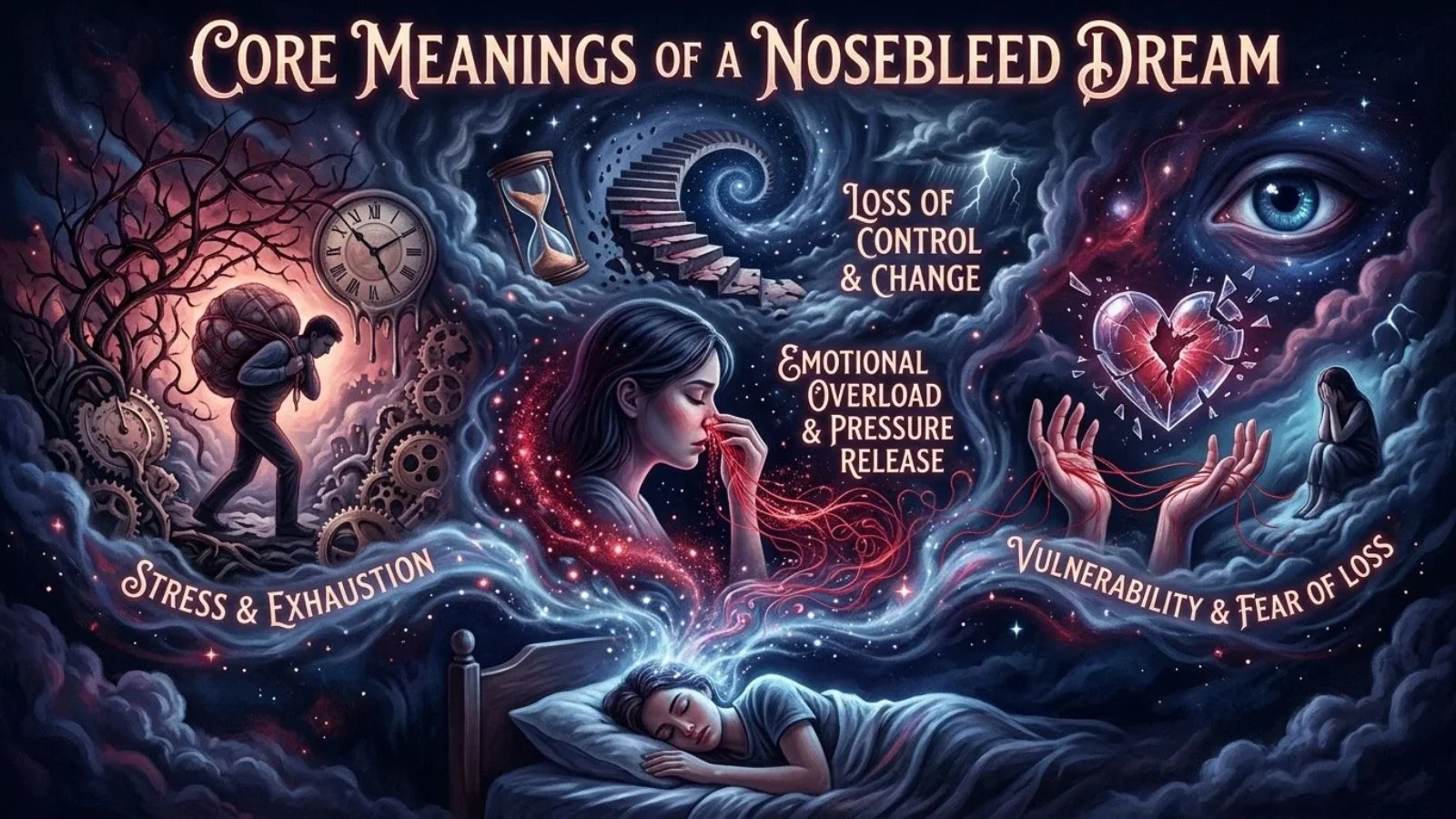
A nosebleed dream rarely has just one meaning. These are the most common interpretations, so see which one fits your life right now.
A dream of nose bleed often means pressure is building up — stress, embarrassment, or a feeling that you are losing energy. The bloody nose dream meaning is usually about release: your mind is showing you that something needs to come out before it causes real damage, whether that is an emotion you have been holding in or a situation that has gone on too long.
Stress and emotional overload. If you’re juggling too much, the dream may show you reaching a breaking point. This may apply if you’ve felt overwhelmed or close to snapping. Ask yourself: what am I carrying that feels too heavy?
Release of suppressed emotions. Blood spilling out can mirror anger, grief, or resentment finally surfacing. This may apply if you’ve been holding feelings in to keep the peace. Ask yourself: what have I not said out loud?
Burnout and loss of energy. Because blood represents life force, losing it can signal that you’re giving more than you have. This may apply if you feel constantly tired or drained. Ask yourself: where is my energy going?
Vulnerability and exposure. A nosebleed on your face is hard to hide. This version often reflects fear of embarrassment or being “found out.” Ask yourself: where do I feel watched or judged?
Health anxiety. Sometimes the dream simply echoes worry about your body, especially after a health scare or a stressful news story. Ask yourself: is there a concern I should address while awake?
Cleansing and renewal. Not every blood dream is negative. A nosebleed can symbolize letting go of old habits, relationships, or beliefs to make room for change. Ask yourself: what am I ready to release?
Loss of control. Bleeding you can’t stop may reflect a situation that feels like it’s slipping away. Ask yourself: where do I feel powerless right now?
Nosebleed Dream Scenarios Explained: Situations

Details change the message. Here are the most common situations, starting with where and how the nosebleed happens.
Nosebleed in Public or in Front of Others
Bleeding while people watch usually points to fear of embarrassment or judgment. You may feel exposed in some area of life, such as a new job, a relationship, or a secret you’re worried will come out. If others helped you in the dream, it can suggest you have more support than you realize.
Nosebleed at Work or School
This setting often links to performance pressure. The dream may reflect deadlines, exams, or a fear of making a mistake in front of colleagues or classmates. It can also be a sign of burnout, especially if you felt too tired to continue.
Nosebleed That Won’t Stop
Bleeding that keeps going suggests a problem that feels endless or out of your control. It may mirror ongoing stress, a draining situation, or an emotion you can’t shake. This version is a strong nudge to rest, set boundaries, or ask for help.
Sudden or Unexpected Nosebleed
A nosebleed that appears out of nowhere often reflects surprise or shock in waking life. Something may have caught you off guard, or you may feel tension building without knowing why.
Painless vs. Painful Nosebleed
A painless nosebleed often signals quiet emotional release or a slow drain you haven’t noticed. A painful one points to conflict, hurt, or a situation that feels actively damaging.
Heavy Bleeding vs. a Few Drops
Heavy bleeding suggests intense emotion or serious overwhelm. A few drops may be a gentle warning that small stresses are adding up.
Nosebleed Dream Scenarios Explained: Who Is Bleeding
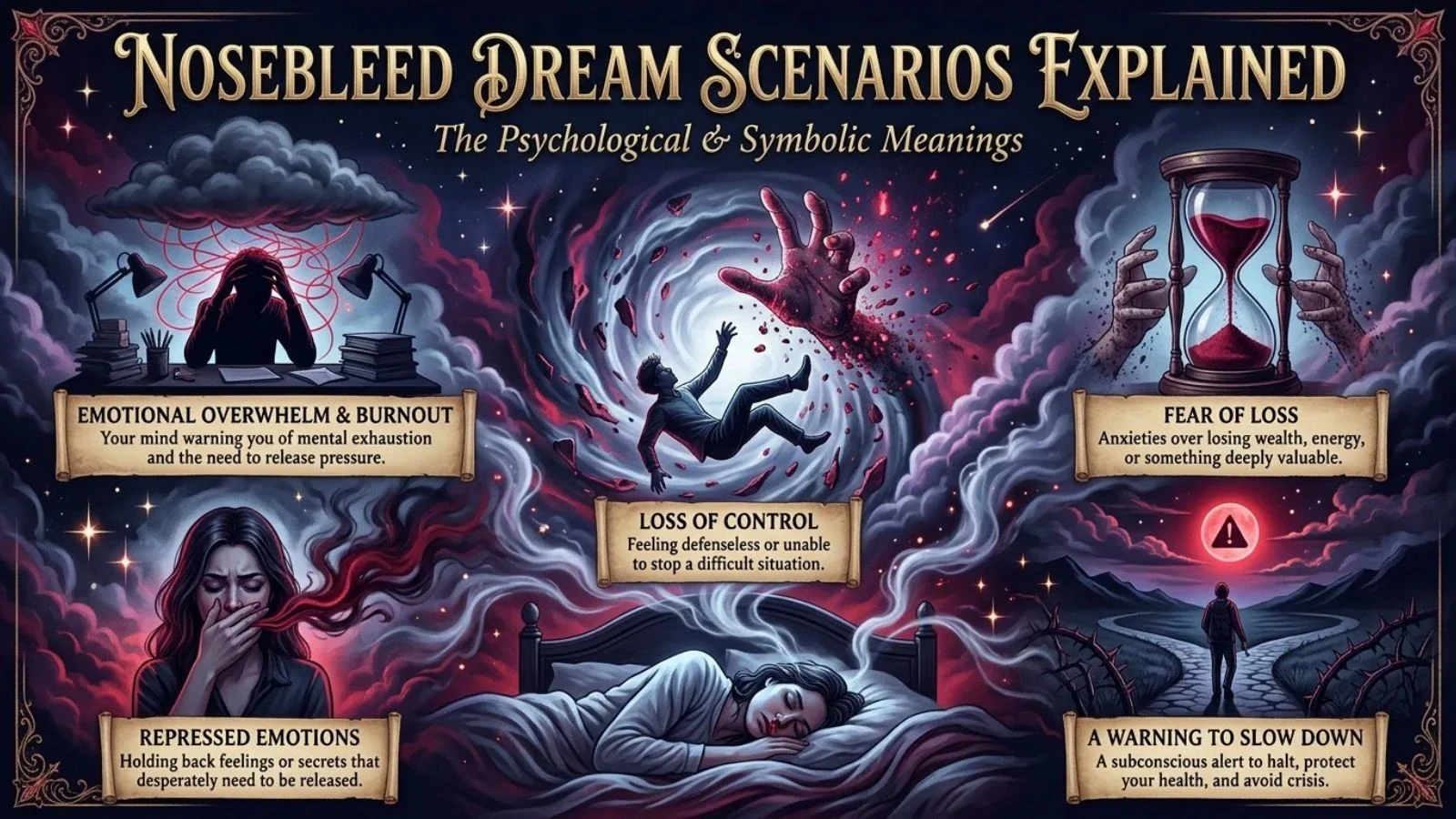
Who is bleeding matters just as much as how. When someone else appears in the dream, the meaning often shifts toward your relationships and your sense of responsibility.
Someone Else Having a Nosebleed
Watching another person bleed often reflects concern for them or for your connection with them. You may sense that they are stressed or hurting. It can also show that you feel helpless to fix a problem that isn’t yours to carry.
A Child or Baby with a Nosebleed
This version usually taps into protective instincts. It may reflect worry about a child’s health, safety, or future. If you don’t have children, the child can represent your own inner vulnerability or a new project that feels fragile.
A Family Member or Partner with a Nosebleed
Because blood is tied to family and closeness, this dream can point to tension or emotional strain in that relationship. Ask yourself whether the person seems overworked, unhappy, or distant. It may be a cue to check in with them.
A Stranger with a Nosebleed
A stranger often stands in for an unfamiliar part of yourself or a stress you haven’t identified. Notice how you reacted: helping suggests compassion, while ignoring them may point to avoidance.
Your Ex or an Enemy with a Nosebleed
This dream can bring up unresolved feelings such as anger, guilt, or lingering attachment. Seeing a rival bleed may reflect a wish for the conflict to end, or fear of what that conflict could cost you. Check how you felt afterward: relief, satisfaction, or sadness can reveal what’s still unsettled.
Nosebleed Dream Scenarios Explained: Causes

Small details often reveal the most. Here is what the cause of the bleeding, and what you did about it, can suggest.
Nosebleed After Being Hit or Punched
This usually points to conflict or an emotional blow. You may feel attacked, criticized, or caught off guard by someone’s words or actions. If you did the punching, it can reflect anger or guilt about how you’ve treated someone.
Nosebleed from Blowing Your Nose
Blowing your nose is an act of clearing out. This version often signals pressure you are trying to release, such as stress or unspoken feelings. It can also suggest you’re ready to “clear the air” in a situation.
Blood on Your Clothes, Hands, or Bedsheets
Blood that spreads onto your surroundings can reflect worry about how your stress affects others, or fear that a private struggle is becoming visible. Blood on your hands may also connect to guilt or responsibility.
Wiping or Cleaning the Blood Away
Cleaning up suggests a desire to restore order. If the blood comes off easily, you may be coping well. If it keeps returning, you may be trying to hide something that needs attention.
Blood Coming from Both Nostrils
Two streams can symbolize a double burden, such as work and family pulling at you at once. It may also suggest the pressure feels more intense than usual.
Dreaming of a Nosebleed While Pregnant
Pregnancy dreams are often vivid because of hormones, changing sleep, and natural anxiety about the body and the baby. A nosebleed here usually reflects worry or vulnerability rather than a warning. If you are concerned about real symptoms, speak with your doctor or midwife.
Waking Up with a Real Nosebleed
Dry air, congestion, or pressure changes can cause a real nosebleed that your sleeping brain weaves into the dream. If real nosebleeds are frequent or heavy, see a doctor.
Spiritual Interpretations of a Nosebleed Dream

Many people look beyond psychology and read a nosebleed dream as a spiritual message. These views are belief-based, so use them as prompts for reflection rather than fixed answers.
Side matters in some traditions: the right nose bleeding spiritual meaning is often read as a release of built-up pressure or a sign that something you have been holding in — anger, frustration, or an unspoken truth — is finally finding its way out. In several folk readings, the right side is linked with action and the outer world, so a bleed on the right can point to stress connected to work, conflict, or a decision you have been putting off, rather than to anything medical.
General spiritual meaning. In many spiritual circles, blood stands for life energy, and a nosebleed can signal that your energy is out of balance. Some read it as a sign of overwork, a call to rest, or a reminder to protect your peace. Others see it as spiritual cleansing, where something heavy is being released so renewal can begin.
Intuition and awareness. Because the nose is linked to breath and sensing, some traditions connect a nosebleed dream to heightened intuition. The dream may invite you to pay closer attention to your instincts or to something you have been ignoring.
Chakra perspective. Practitioners who work with chakras sometimes link the nose and forehead area to the third eye, which is associated with insight. A nosebleed may be read as a blockage or overload in this area, suggesting you need quiet time, grounding, or meditation.
Christian and biblical perspective. In Scripture, blood is closely tied to life, sacrifice, and covenant. Some Christians therefore view blood dreams as symbols of cleansing, repentance, or spiritual renewal. The Bible does not mention nosebleed dreams specifically, and interpretations vary widely between traditions and individuals.
Islamic perspective. Classical Islamic dream interpretation often treats dreams as symbolic and dependent on the dreamer’s circumstances. Scholars differ on how to read blood imagery, so it is best to consult a trusted scholar rather than rely on a single online source.
Psychological Perspectives on Nosebleed Dreams

Psychologists approach dreams as reflections of the mind rather than messages from outside it. Several major perspectives can help explain why a nosebleed might appear while you sleep.
The Freudian view. Sigmund Freud saw dreams as a way for repressed thoughts and feelings to surface in disguised form. Through this lens, a nosebleed may represent emotions you have pushed down, such as anger, fear, or desire, finding a symbolic way out.
The Jungian view. Carl Jung treated dreams as communication between the conscious and unconscious mind. Blood and the body are archetypal symbols of life, vitality, and transformation. A nosebleed might signal that something from your “shadow,” the parts of yourself you avoid, is trying to be acknowledged.
The continuity hypothesis. Modern sleep researchers often note that dreams tend to reflect waking concerns. If you are under pressure, worried about your health, or dealing with conflict, those themes can appear in dream form. A nosebleed may simply be your brain’s dramatic shorthand for “too much.”
Emotional regulation during REM. Many researchers believe REM sleep helps the brain process emotions. Stressful dreams may be part of that process, which is why they often increase during difficult periods.
Stress and anxiety dreams. People who are anxious or overwhelmed tend to report more vivid and distressing dreams, and bodily imagery like bleeding is common.
When to seek support. An occasional blood dream is normal. If distressing dreams are frequent, linked to past trauma, or disrupt your sleep and daily life, consider talking with a therapist or doctor.
Cultural and Folk Beliefs

Nosebleeds and blood have long carried symbolic weight in folklore. Folk beliefs are passed down by word of mouth and vary by family and region, so treat them as cultural color, not fact.
Nose folklore in general. The nose features in many popular superstitions. One of the best known is that an itchy nose means someone is thinking or talking about you. This belief is documented in folklore collections, including the University of Southern California’s folklore archive. It shows how people have long treated the nose as a kind of signal, which may help explain why a nosebleed in a dream feels so meaningful.
Folk remedies. Folk cures for nosebleeds have been recorded for generations. One early 20th-century newspaper column on superstitions described a belief that a key worn on a chain around the neck could prevent or cure a nosebleed. Remedies like this reflect how people once tried to bring a sense of control to a sudden, alarming event.
Blood as an omen. Across many cultures, blood is linked to life, kinship, and fate, so blood imagery in dreams is often read as a message or warning. Specific meanings differ widely between communities, and no single belief applies everywhere.
Why do these beliefs endure? Folklorists note that superstitions persist because they are shared across generations and can’t be proven or disproven. For dream readers, that makes them best used as prompts for reflection.
Positive vs. Negative Interpretations

Many readers want to know one thing: is this a good sign or a bad one? The honest answer is that a nosebleed dream is better seen as information than as a prediction. It points to what is happening inside you, and that can be helpful either way.
When it may be a positive sign. A nosebleed dream can reflect release, healing, or transformation. If you felt relief, calm, or lightness afterward, the dream may suggest you’re letting go of stress, old habits, or emotions you’ve carried for too long.
When it may be a warning to pay attention. If the dream left you frightened, drained, or helpless, it may be highlighting burnout, neglected needs, or an unresolved conflict. This isn’t a bad omen. It’s a nudge to slow down and take care of yourself.
Why “good omen vs. bad omen” is the wrong frame. The same image can carry different meanings depending on your feelings and circumstances. Ask what the dream is drawing your attention to, not whether something bad will happen.
| Dream detail | Possible positive reading | Possible cautionary reading |
| Bleeding stops quickly | Stress is easing | Brief warning to rest |
| Bleeding that won’t stop | Strong need to release | Ongoing drain or overwhelm |
| Feeling relieved | Emotional release | Suppressed feelings finally surfacing |
| Blood in public | Support from others | Fear of exposure |
| Cleaning it up | Coping well | Hiding a problem |
How to Interpret Your Own Nosebleed Dream: Step-by-Step

General meanings are a useful starting point, but your own dream is the best source of clues. Follow these six steps to work out what yours may be saying.
1. Record the dream right away. Dreams fade quickly. Write down everything you remember, including the setting, the people, and what happened, even if it seems random.
2. Name the strongest emotion. Were you scared, embarrassed, calm, or relieved? Your feeling in the dream is often the most important clue to its meaning.
3. Note where the blood came from and where you were. A nosebleed at work points to a different theme than one at home or in a crowd. Details like these help you choose the right scenario from this guide.
4. Connect it to your waking life. Ask what has been draining, pressuring, or worrying you lately. Dreams often echo the past few days, so look for recent stressors or unspoken feelings.
5. Look for patterns. One dream may be a passing reaction. If it keeps returning, track when it happens and what was going on beforehand.
6. Choose one small action. You don’t need to solve everything. Rest more, have an honest conversation, set a boundary, or simply talk to someone you trust.
Quick dream journal template (copy and paste):
- Date:
- What happened:
- Who was there:
- How I felt in the dream:
- How I felt on waking:
- What’s on my mind this week:
Physical and Medical Context

Not every nosebleed dream is symbolic. Sometimes the body plays a part, and it helps to know the difference.
Why physical factors can shape dreams. Dry air, congestion, allergies, a sinus issue, or an awkward sleeping position can cause discomfort in the nose. Your sleeping brain may weave that sensation into a dream, turning a stuffy or tickly nose into bleeding.
If you get real nosebleeds at night. Nosebleeds are common and usually harmless. Frequent causes include dry air, nose picking, allergies, colds, and nasal sprays. Some medications, including blood thinners, can also make them more likely. Running a humidifier, staying hydrated, and using a saline spray may help if dryness is the cause.
When to see a doctor. Seek medical advice if you notice:
- Frequent or heavy nosebleeds
- Bleeding that lasts more than 20 minutes despite firm pressure
- A nosebleed after a head injury
- Nosebleeds along with easy bruising, dizziness, or other unusual symptoms
If you’re pregnant or take blood-thinning medication, mention any repeated nosebleeds to your doctor or midwife.
Keep it in perspective. Dreaming of a nosebleed does not mean you are ill. Most of the time it reflects stress or emotion, not a medical problem.
Why Do I Keep Having This Dream?

A single nosebleed dream is usually a passing reaction. When it keeps coming back, your mind is likely trying to get your attention.
Ongoing stress. Recurring dreams often track a problem that hasn’t been resolved. If work pressure, money worries, or family tension are still weighing on you, the dream may repeat until something changes.
Unprocessed emotions. Feelings you have pushed aside, such as anger, grief, or resentment, can resurface night after night in symbolic form.
Poor sleep and anxiety. Irregular sleep, high anxiety, and sleep disruption can make dreams more vivid and easier to remember. Waking often during the night also means you recall more of what you dreamed.
Lifestyle factors. Alcohol, caffeine, heavy late meals, and screen time before bed can all affect sleep quality and dream intensity. Some medications can also change how vividly you dream, so check with your doctor or pharmacist if you notice a shift after starting a new one.
What to try. Use the dream journal from the previous section to look for patterns. Note what happened the day before each dream. Often the trigger becomes clear within a couple of weeks.
When to get support. Consider talking with a therapist or sleep specialist if the dreams:
- Happen several times a week
- Leave you anxious or exhausted during the day
- Are linked to past trauma
- Disrupt your sleep for more than a few weeks
Recurring dreams are common and rarely a sign of anything serious. Treat them as a signal to look after yourself.
How to Reduce Stressful Dreams

You can’t fully control your dreams, but you can make them less intense by calming your mind and body before sleep. These habits are simple and work best when practiced consistently.
Build an evening wind-down routine. Go to bed and wake at similar times each day. In the last hour before sleep, do something quiet, such as reading, a warm shower, or soft music.
Limit common triggers. Cut back on caffeine in the afternoon, avoid heavy meals close to bedtime, and reduce alcohol, which can disrupt sleep and make dreams more vivid. Try to put screens away at least 30 minutes before bed.
Do a “brain dump.” Spend five minutes writing down worries, tasks, and unfinished thoughts. Getting them onto paper can stop them from circling in your mind overnight.
Try breathing or gentle movement. Slow breathing, meditation, or light stretching can lower stress and help your body relax. A simple pattern is breathing in for four counts and out for six.
Rewrite the ending. Imagery rehearsal is a technique used in therapy for recurring nightmares. While awake, you recall the dream and imagine a calmer ending, such as the bleeding stopping and you feeling safe. Rehearse it for a few minutes each day.
Keep the room comfortable. A cool, dark room helps sleep quality. If dry air irritates your nose, a humidifier may help.
Related Dream Meanings

If your nosebleed dream left you curious, these related dreams explore similar themes of blood, the body, and emotional release. Each one can add context to what you experienced.
Dreaming of blood. Blood in any form often symbolizes life force, emotion, and family ties. This guide covers the wider meanings, from loss and injury to healing and renewal.
Dreaming of teeth falling out. Another vivid body dream that is linked to stress, change, and fear of embarrassment. If you felt exposed in your nosebleed dream, this one may resonate.
Dreaming of being injured. Injury dreams often reflect feeling hurt, criticized, or unprotected. They pair well with the “hit or punched” scenario above. [Link to your post]
Dreaming of someone else bleeding. If another person was bleeding in your dream, this guide explores what it may say about your concern for them and the relationship. [Link to your post]
Dreaming of a bloody nose in the Bible. For readers who want a faith-based perspective, this post can go deeper into blood as a symbol of life, sacrifice, and renewal. [Link to your post]
Dreaming of hospitals. Hospital dreams often connect to healing, vulnerability, and health worries, which overlap with the health anxiety theme in this article. [Link to your post]
Keep exploring. Dreams rarely stand alone, so if you notice other recurring images, check them against your dream journal for patterns.
Frequently Asked Questions
Is dreaming about a nosebleed a bad omen?
Not necessarily. Most often it reflects stress, emotional release, or a need for rest. It is better seen as a prompt for reflection than a prediction.
What does it mean to dream of a nosebleed without pain?
A painless nosebleed often suggests quiet emotional release or a slow drain on your energy that you haven’t fully noticed.
Does a nosebleed dream mean I’m sick?
No. These dreams usually reflect emotions or stress. If you are worried about your health or have real, frequent nosebleeds, speak with a doctor.
What does it mean to dream of someone else’s nosebleed?
It may reflect concern for that person or tension in your relationship with them. Consider whether they seem stressed or distant.
Is a nosebleed dream spiritual?
Some people read it as a message about energy, intuition, or cleansing. These views are belief-based, so use them as reflection, not fact.
What does a nosebleed dream mean in the Bible or Islam?
Neither tradition offers one official meaning for nosebleed dreams. Blood often symbolizes life and renewal, and interpretations vary, so consult a trusted religious scholar.
What does it mean to dream of a nosebleed that will not stop?
A nosebleed that keeps bleeding often points to an ongoing drain on your energy — stress, overwork, or an emotional issue that has not been addressed. It can feel alarming, but it is usually symbolic rather than a health warning. The dream is asking you to notice what is leaking away and to take one practical step to protect your rest and boundaries.
Conclusion
A nosebleed dream can feel alarming, but it is rarely a warning of something terrible. More often, it is your mind’s way of pointing to stress, emotional release, vulnerability, or a need for renewal.
The meaning that fits best depends on how you felt in the dream, who was involved, and what is happening in your life right now.
If you lean toward psychological, spiritual, or practical explanations, treat the dream as a prompt for reflection, not a verdict.
Start by writing down what you remember and noticing the emotions behind it. Then take one small step, such as resting more, having an honest conversation, or setting a boundary.
If the dream keeps returning or you’re worried about real nosebleeds, speak with a therapist or doctor.
Had a nosebleed dream? Share it in the comments, download the dream journal template, or read our guide to dreaming of blood next.
The nose bleed dream meaning usually points to something leaking away — energy, patience, or a worry your mind keeps returning to — until you stop and pay attention.

Stanley Krippner is a renowned psychologist and dream researcher known for studying dreams, consciousness, and dream interpretation.
At DreamHatchs.com, we explore insights into dreams and their meanings.








1 thought on “Nose Bleeding in Dreams: Common Meanings Explained for 2027”