You’re forty years old, with a mortgage, a career, and a reasonably organized life. Yet tonight you’re sprinting down a hallway that keeps stretching longer.
Clutching a schedule you can’t read, late for a final exam in a class you forgot you were taking then you wake up with your heart pounding, relieved it wasn’t real.
If this sounds familiar, you’re far from alone. Dreaming about school is one of the most common dream themes, and it can show up decades after graduation.
But why does the mind keep sending us back to the classroom? In this guide, you’ll learn what school dream meaning really points to, from exam panic and missing lockers to reunions with old teachers.
We’ll explore the psychology behind these dreams, what triggers them, and how to stop the stressful ones from repeating.
Quick Answer and Key Takeaways
Quick answer: Dreaming about school usually means you feel tested, judged, or unprepared in some area of your waking life. It is rarely a prediction and far more often a reflection of stress, pressure, or a lesson you’re still learning.
Key takeaways:
- Exam dreams point to fear of judgment or feeling unprepared for a real-life challenge, such as a work review, big decision, or new responsibility.
- Being late or lost often signals feeling behind in life, lacking direction, or worrying that you’re overlooking something important.
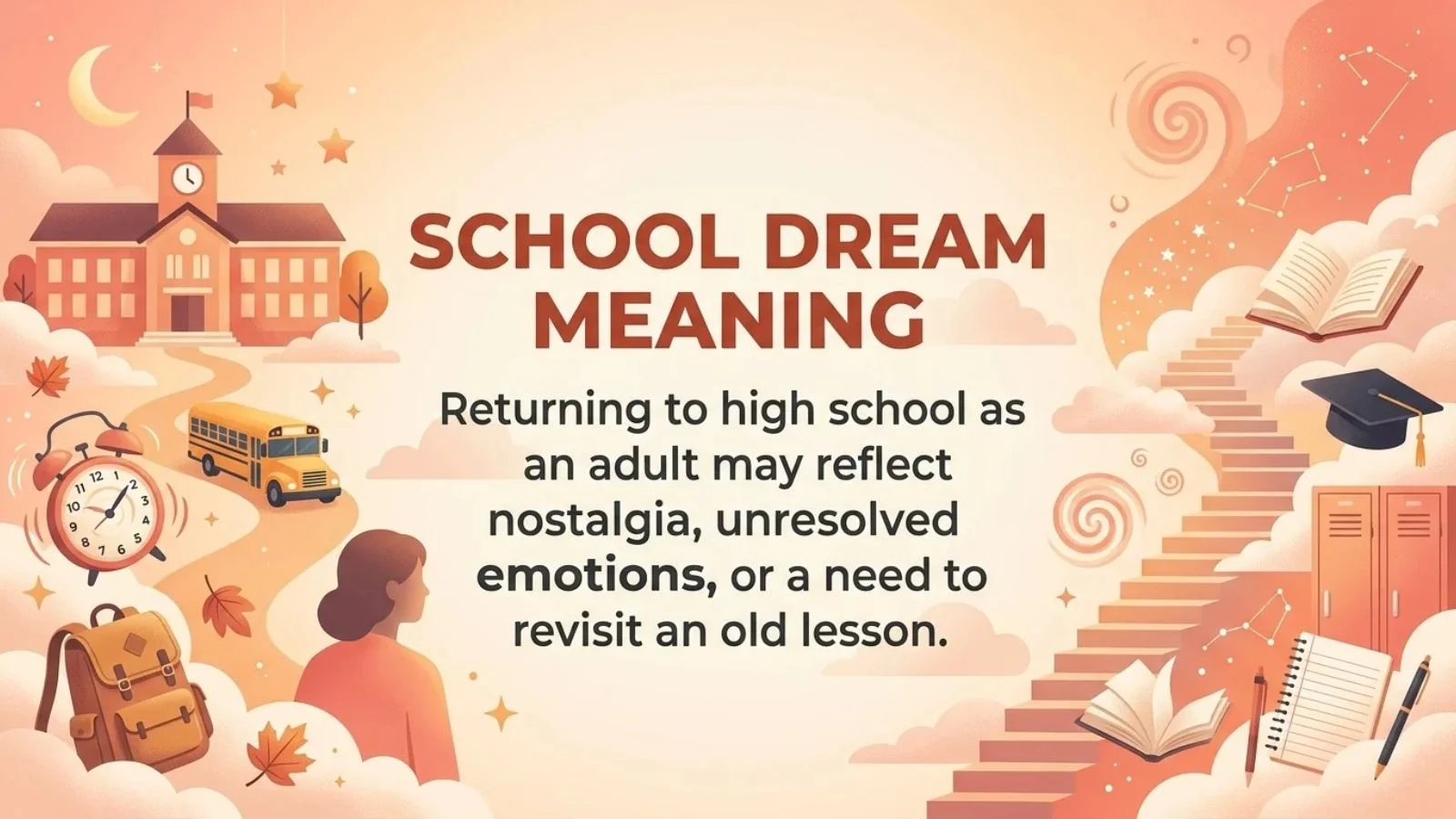
- Returning to high school as an adult may reflect nostalgia, unresolved emotions, or a need to revisit an old lesson.
- Social dreams, such as bullying or reunions with classmates, usually connect to belonging, old wounds, or how you see your past self.
- Embarrassing scenarios, like being naked in class or presenting unprepared, reflect vulnerability and fear of exposure.
- Recurring school dreams suggest a stressor or unmet need that hasn’t been addressed yet.
- Positive school dreams, like graduating or learning something new, can signal growth, confidence, and readiness.
Keep in mind that dream interpretation is a tool for self-reflection, not a science with fixed answers. The same dream can mean different things to different people, depending on the emotions you felt, who appeared, and what’s happening in your life right now. Use these takeaways as a starting point, then read on for a deeper look at why the mind keeps returning to the classroom and how to decode your own dream.
Why Do We Dream About School?

School as a Universal Symbol
For most people, school is the first place where we are measured, ranked, and judged. Grades, teachers’ opinions, and classmates’ acceptance shaped how we saw ourselves during our most formative years. Because those experiences carry strong emotions, the brain tends to store them deeply, and school becomes a convenient symbol for any situation in which we feel evaluated or under pressure.
The Psychology Behind the Dreams
Researchers have offered several explanations. The continuity hypothesis suggests that dreams reflect our waking concerns, so a looming work deadline may appear as a final exam. Threat simulation theory proposes that dreaming works as a rehearsal for stressful situations, which would explain why school dreams are so often tense. Meanwhile, studies of REM sleep, the stage when most vivid dreaming occurs, suggest the brain processes emotions during this time, often recycling old, emotionally charged memories to make sense of present feelings.
This also explains why the dream rarely feels like a calm history lesson. Your mind borrows the setting, but the emotion belongs to the present: the dread of being unprepared, the embarrassment of being exposed, the worry of falling behind.
Science vs. Interpretation
It’s worth being honest here: no scientific consensus says a particular dream symbol carries one fixed meaning. Dream interpretation is best treated as a framework for reflection rather than a verdict. The value lies in asking what the dream made you feel and where that feeling shows up in your life right now.
General Meanings of School Dreams
While every dream is personal, school dreams tend to circle around a handful of core themes. Recognizing them is the first step toward understanding your own.
Fear of Failure or Judgment
School is where success and failure were graded in red ink. When you dream of a failed test or a disappointed teacher, your mind may be echoing a current fear of falling short, whether at work, in a relationship, or in a personal goal.
Feeling Unprepared
Walking into an exam without studying is the classic version of this dream. It often appears when you’re facing a situation that demands more skill, time, or confidence than you feel you have, such as a promotion, a presentation, or becoming a parent.
Desire for Growth and Learning
Not every school dream is negative. Sometimes the classroom represents curiosity and a hunger to develop. If you dream of learning something new, it may reflect a wish to change careers, pick up a skill, or grow in a new direction.
Nostalgia and Unresolved Issues
Returning to your old school can stir up memories of friendships, rivalries, and moments you never fully processed. These dreams may point to unfinished emotional business or a longing for a simpler time.
Life Transitions and Being “Tested”
Big changes, like a new job, a move, or a breakup, often trigger school dreams because transitions feel like pass-or-fail moments. The dream mirrors the sense that you’re being evaluated by life itself.
Imposter Syndrome
Dreams of being in the wrong class, sitting at the wrong desk, or not belonging can reflect the feeling that you’re not as qualified as others believe you to be.
Common School Dream Scenarios and Meanings
Now let’s look at specific scenarios. For each one, you’ll find what the dream may mean and a question to help you reflect.
Academic Performance Dreams
Taking an exam you didn’t study for
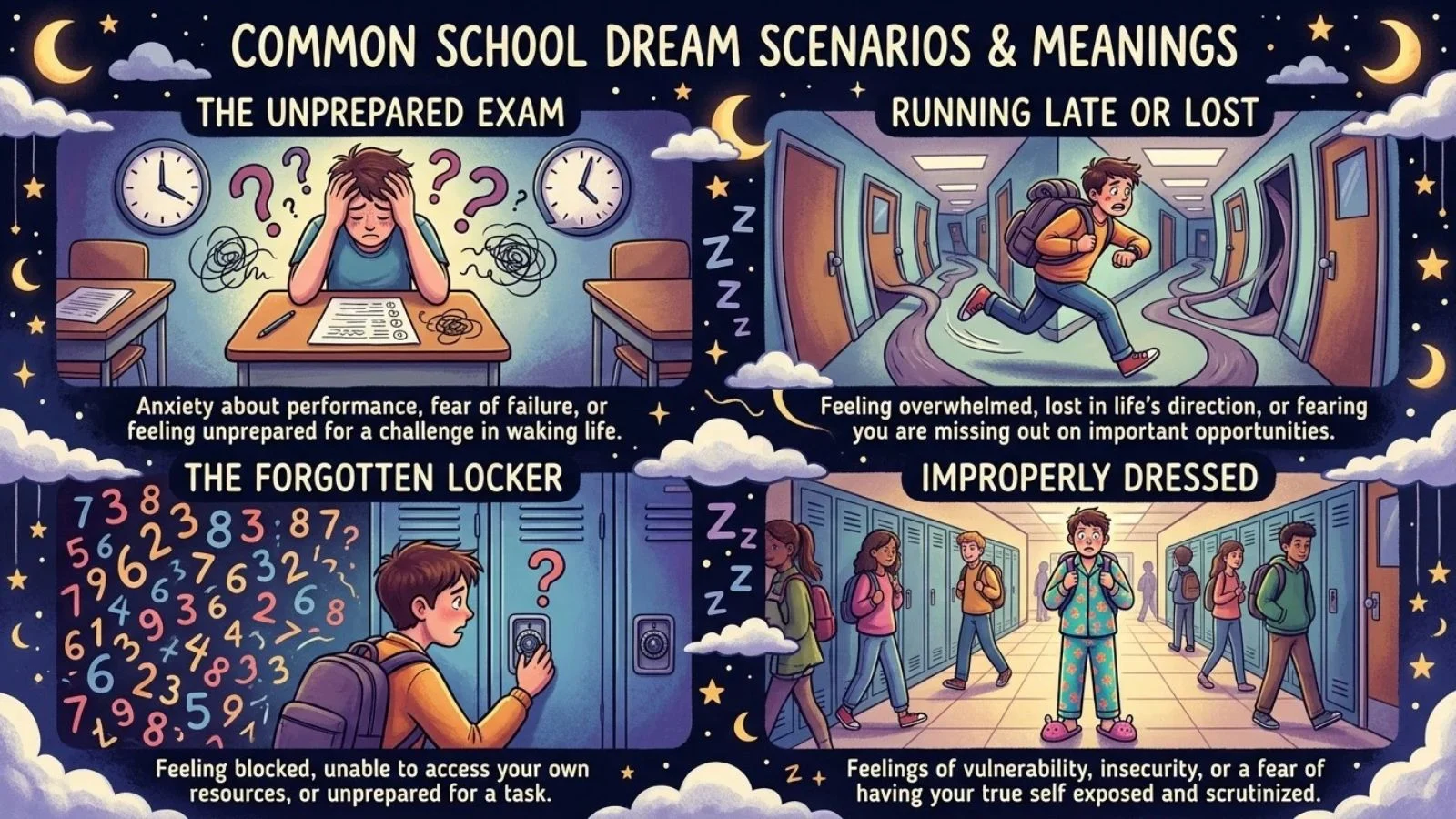
This is the classic school dream. It often reflects fear of being judged or caught unprepared, especially before a work review, a major decision, or a new responsibility. Ask yourself: What situation right now makes me feel underprepared?
Failing a test or class
Failing in a dream rarely predicts real failure. More often it reveals self-doubt, perfectionism, or harsh self-criticism. Ask yourself: Whose standards am I trying to meet?
Not graduating or missing credits
Being stuck while everyone else moves on can signal feeling behind in life or worrying that an important goal is unfinished. It commonly appears around milestones like a new decade or a career change. Ask yourself: What do I feel I still need to complete?
Forgetting your homework
This points to a nagging sense that you’ve overlooked a responsibility, deadline, or promise. Ask yourself: What task am I avoiding or afraid I’ve forgotten?
Cheating on a test
Cheating may suggest pressure to take shortcuts, fear of being exposed as an imposter, or guilt over a real-life choice. Ask yourself: Where do I feel I must pretend to know more than I do?
Acing an exam
The positive version signals confidence, readiness, and recognition of how far you’ve come. It often appears after you’ve worked hard toward something. Ask yourself: What achievement am I ready to acknowledge?
Time and Navigation Dreams
Being late for class
Racing to arrive on time is one of the most common school dream images. It usually reflects a feeling of being behind in life, missing opportunities, or struggling to keep up with demands. Ask yourself: Where do I feel I’m running out of time?
Missing the bus
Watching the bus pull away often signals a missed opportunity or a sense that life is moving on without you. It can also reflect a loss of control over your schedule or direction. Ask yourself: What chance do I fear I’ve let pass?
Can’t find your classroom or locker
Wandering hallways while searching for the right room is a vivid symbol of feeling lost or uncertain about your path. It frequently appears during career changes, moves, or any period when the next step isn’t clear. Ask yourself: What direction am I unsure about?
Forgetting your schedule or locker combination
Being unable to recall basic information points to a fear of losing control or lacking the tools you need. It may reflect stress over a task that feels more complicated than it should. Ask yourself: What do I feel I’m missing to move forward?
Wrong classroom or wrong building
Sitting in a class you never signed up for can reflect imposter syndrome, or a sense that you’ve taken a path that doesn’t fit who you are. Ask yourself: Am I in the right place, or am I following someone else’s plan?
Social and Emotional Dreams

Being bullied
Dreams of bullying often draw on old wounds or current conflict. They may reflect a situation where you feel powerless, criticized, or disrespected, whether at work, at home, or inside your own head. Ask yourself: Who or what makes me feel small right now?
Being ignored by classmates
Being invisible in a crowded classroom points to a fear of rejection or a longing to be seen and valued. It can surface during lonely periods or after a move or job change. Ask yourself: Where do I feel unheard or left out?
Meeting old friends or classmates
Seeing familiar faces may reflect nostalgia, or a quiet comparison between who you were and who you are now. If the mood is warm, it can signal a wish to reconnect. If it’s uneasy, it may point to unresolved feelings. Ask yourself: What did that person represent to me?
Seeing an old crush
A school crush often symbolizes a past version of yourself, or qualities you admired and want more of, such as confidence, excitement, or romance. It can also appear when something feels missing in your current relationships. Ask yourself: What was I feeling back then that I miss now?
Feeling out of place or too old for school
Being the oldest person in the room is a common image for adults. It can reflect feelings behind your peers, worrying you’ve outgrown a situation, or sensing you’ve entered a new phase of life that doesn’t fit yet. Ask yourself: Where do I feel I don’t belong?
Exposure and Vulnerability Dreams
Being naked at school
Perhaps the most famous embarrassment dream, nakedness usually symbolizes vulnerability and fear of being exposed. It may appear when you feel your flaws, secrets, or insecurities are on display, or when you’re stepping into the spotlight. Notably, the dreamer is often more distressed than the onlookers, who may not notice at all. Ask yourself: What am I afraid people will see?
Giving a presentation unprepared
Standing before the class with no notes reflects performance anxiety and pressure to prove yourself. It often shows up before real-life presentations, interviews, or any moment of public scrutiny. Ask yourself: Where do I feel I must perform without a safety net?
Being called on and not knowing the answer
Freezing when the teacher points at you signals a fear of being put on the spot and found lacking. It can reflect worry that your knowledge or competence will be questioned. Ask yourself: What do I fear being challenged on?
Embarrassing yourself in front of the class
Tripping, stuttering, or making a mistake in front of classmates often points to social anxiety and a harsh inner critic. These dreams tend to magnify small fears into public humiliation. Ask yourself: Am I holding myself to an impossible standard?
Authority Figure Dreams

Teacher yelling at you
Being scolded in front of the class often reflects guilt, self-criticism, or a clash with someone in authority, such as a boss, parent, or mentor. Sometimes the teacher is simply your own inner critic, voiced loudly. Ask yourself: Who am I afraid of disappointing?
Meeting a favorite or beloved teacher
Seeing a teacher who believed in you can signal a need for guidance, encouragement, or reassurance. It may also point to a lesson or piece of advice from that person that applies to your life now. Ask yourself: What would this teacher tell me today?
Being sent to the principal’s office or getting detention
Punishment dreams usually connect to guilt, fear of consequences, or worry that you’ve broken a rule, spoken out of turn, or let someone down. They may also reflect resentment toward rules that feel unfair. Ask yourself: What am I feeling guilty or defensive about?
Being the teacher yourself
Standing at the front of the room can symbolize leadership, mentorship, or readiness to share what you know. If you feel confident, it may reflect growing authority. If you feel unprepared or ignored by students, it can reveal doubts about your ability to lead or guide others. Ask yourself: Where am I being asked to take charge?
Returning to School Dreams
Going back to high school as an adult
Walking the old hallways with your grown-up life intact is a very common dream. It may reflect nostalgia, unresolved emotions from those years, or a sense that a lesson from that time still needs attention. It can also appear when current situations, like office politics, echo the social dynamics of adolescence. Ask yourself: What from that era still affects me today?
Returning to college
Heading back to campus often signals a desire for growth, or a feeling that you’ve left something unfinished, such as a degree, a passion, or a path not taken. Ask yourself: What part of me still wants to learn or explore?
Starting a new school
Being a new student reflects the uncertainty of a fresh chapter. It often appears around a move, a new job, or a new relationship, when you’re learning unwritten rules and hoping to fit in. Ask yourself: Where am I the beginner right now?
Back at elementary school
Returning to your earliest school years can point to a need for comfort, simplicity, or reconnection with your inner child. It may also suggest that an old habit or belief formed in childhood is shaping your adult choices. Ask yourself: What did I need as a child that I still need now?
Graduation day
Graduating can symbolize completion, achievement, and readiness for what’s next. If you feel proud, it often marks a real-life milestone. If you feel anxious or unprepared, it may reflect fear of leaving a familiar chapter behind. Ask yourself: What chapter am I ready to close?
Unusual or Surreal School Dreams

School building collapsing, flooding, or changing shape
When the familiar structure falls apart, it often mirrors a sense that your foundation feels unstable. This may relate to uncertainty about your job, relationships, or beliefs. Flooding can point to feeling overwhelmed by emotion, while a shifting layout may reflect rapid change you can’t control. Ask yourself: What in my life feels unsteady right now?
Endless hallways
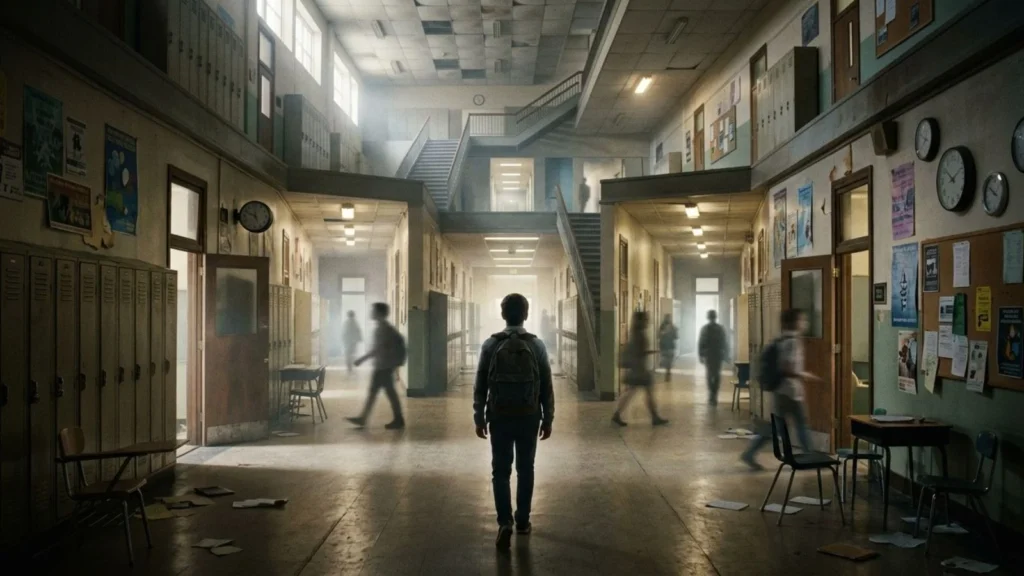
Corridors that stretch on forever are a vivid image of effort without arrival. They may reflect burnout, a goal that keeps moving out of reach, or the feeling of being stuck in a routine. Ask yourself: What am I chasing that never seems to get closer?
Classes you never signed up for
Discovering an unfamiliar course on your schedule often signals responsibilities that were handed to you without your consent. It can also reflect surprise at life’s unexpected demands. Ask yourself: What obligation have I taken on without really choosing it?
Unfamiliar classmates or twisted versions of the school
When the school looks wrong, with strange rooms, unknown faces, or impossible architecture, the dream may be blending old memories with present confusion. It can suggest you’re navigating a situation that feels familiar yet unsettling. Ask yourself: What feels both known and strange to me right now?
How Dream Details Change the Meaning
Two people can dream of the same exam and wake up with very different messages. The details are what personalize the dream, so pay attention to them.
Emotions: The feeling matters most. Anxiety points to pressure or fear of judgment, excitement suggests readiness for a challenge, and calm or neutral feelings may indicate you’re processing something without much stress.
Setting: Elementary school often connects to early beliefs and the need for comfort. Middle and high school tend to involve identity, belonging, and social pressure. College or graduate school usually relates to independence, ambition, and career expectations.
People present: Friends may signal support, strangers can represent unfamiliar demands, teachers point to authority and approval, and family can link the dream to expectations or old roles.
Subject: Math may reflect problem-solving or logic under pressure, art suggests creativity and self-expression, and gym can point to physical confidence or social comparison.
Atmosphere: Bright, warm lighting often feels reassuring, while dim, gray, or chaotic scenes can mirror worry or confusion.
Outcome: Passing or escaping suggests confidence or relief, failing may highlight self-doubt, and waking up mid-dream often shows the emotion was too intense to resolve.
Quick Reference: Detail → Possible Meaning
| Detail | Possible Meaning |
| Anxious feeling | Pressure, fear of judgment |
| Happy feeling | Growth, readiness |
| Elementary school | Comfort, childhood beliefs |
| High school | Identity, belonging |
| College | Ambition, independence |
| Math class | Problem-solving stress |
| Art class | Creativity, self-expression |
| Dark atmosphere | Worry, confusion |
| Passing the test | Confidence |
| Waking up mid-dream | Unresolved intense emotion |
Who Has School Dreams, and Why They Happen Later in Life

School dreams aren’t limited to students. They show up across ages and professions, usually when a person’s current life echoes the pressures of the classroom.
Adults decades after graduation
Many adults are surprised to find themselves back in a classroom long after finishing school. Because school is where we first learned what it feels like to be graded and compared, the brain often reaches for that setting whenever adult life feels like a test, even if the real stakes are a mortgage, a promotion, or a family decision.
Current students
For students, these dreams are typically stress-driven. Upcoming exams, deadlines, and social pressures can turn directly into dreams of missed tests, lost assignments, or being unprepared. In this case, the dream often mirrors reality closely.
Teachers and educators
People who work in schools may dream about the classroom because it fills their daily thoughts. Their dreams often involve losing control of a class, forgetting a lesson plan, or being observed and evaluated.
Parents of school-age children
Watching your child navigate homework, friendships, and report cards can reawaken your own school memories. Parents may dream of their old school or worry about their child’s experience in a dream that blends both.
Career changers and people facing new challenges
Starting a new job, switching industries, or learning a new skill puts you back in the role of beginner. The mind may respond with school imagery because you’re, in a sense, a student again.
What Triggers School Dreams?
Dreams rarely appear out of nowhere. Most school dreams have a trigger, either in your waking life or in your sleep habits. Spotting it can help you understand the dream and reduce how often it returns.
Work deadlines, reviews, and new jobs
Performance reviews, tight deadlines, and unfamiliar roles all involve being evaluated, which is exactly what school taught us to expect. The workplace becomes the classroom, and the boss becomes the teacher.
Major life transitions
Moving, getting married, having a baby, ending a relationship, or retiring can leave you feeling like a beginner again. Transitions often feel like pass-or-fail moments, and the mind responds with school imagery.
Public speaking and presentations
Anticipating a speech, pitch, or interview can bring on dreams of unprepared presentations or being called on in class. The dream often arrives days or even weeks beforehand.
Financial or relationship pressure
Money worries and relationship strain can create a sense of falling short of expectations. School dreams may express the fear of “failing” at adult responsibilities.
Perfectionism and imposter syndrome
If you hold yourself to very high standards or doubt your abilities, your inner critic may take the form of a teacher, a failing grade, or a classroom where you don’t belong.
Sleep factors
Stress is not the only cause. Irregular sleep schedules, sleep deprivation, heavy meals or alcohol before bed, and too much caffeine can make dreams more vivid and easier to remember. Some medications can also intensify dreaming, so speak with a doctor if you notice a sudden change after starting one.
Cultural, Spiritual, and Psychological Interpretations

Beyond modern sleep science, several traditions offer lenses for reading school dreams. None are proven, but each can spark useful reflection.
Freudian View
Sigmund Freud saw dreams as expressions of hidden wishes and repressed anxieties. From this angle, an exam dream may disguise a fear of judgment or a conflict you haven’t faced consciously. The school setting is a familiar costume for deeper worries.
Jungian View
Carl Jung viewed dreams as messages from the unconscious that guide personal growth, a process he called individuation. Teachers and students can appear as archetypes: the wise mentor, the eager learner, or the shadow self, representing traits you’ve ignored. A school dream may suggest a lesson you’re meant to integrate.
Gestalt Approach
Gestalt therapy treats every element of a dream as part of the dreamer. The strict teacher, the lost student, and even the crumbling building all represent aspects of you. Asking “which part of me is this?” can reveal inner conflicts, such as a harsh critic arguing with a frightened learner.
Spiritual and Religious Perspectives
Many spiritual traditions see school dreams as symbols of life lessons, tests of character, or stages of spiritual growth. Some readers interpret them as a nudge to keep learning, stay humble, or revisit a lesson they haven’t mastered. Interpretations vary widely between faiths and individuals.
Cultural Variations
Culture shapes how school dreams feel. In societies that place strong emphasis on exams and academic achievement, such dreams may carry heavier pressure and expectations. Elsewhere, dream symbols are tied to community, tradition, or ancestral guidance. How your culture views education, success, and dreams influences what a classroom means to you.
Positive School Dreams: When They’re Good Signs
Not every trip back to the classroom is stressful. Some school dreams leave you feeling energized, proud, or quietly hopeful, and these deserve just as much attention as the anxious ones.
Learning something new
Absorbing a lesson with ease or enjoying a fascinating class often reflects curiosity and openness to change. It may appear when you’re considering a new skill, career path, or hobby, or when your mind is already making room for growth. Ask yourself: What do I want to learn next?
Graduating successfully
Walking across the stage with a sense of pride can signal that you’ve completed an important chapter. It often follows real effort and may reflect self-acceptance or readiness for what comes next. Ask yourself: What have I accomplished that I haven’t fully celebrated?
Feeling happy or confident at school
Moving through the halls with ease, being welcomed by classmates, or answering questions correctly suggests you feel capable and secure. It may mirror strong self-esteem or healthy relationships in your waking life. Ask yourself: What’s helping me feel this confident right now?
Receiving praise or recognition
Being complimented by a teacher or earning an award can point to a need for validation, or to recognition you’re beginning to give yourself. Ask yourself: Am I acknowledging my own progress?
What These Dreams May Mean
Positive school dreams are commonly linked to growth, readiness, new opportunity, and emotional healing. They can also show that you’ve worked through a past stressor, since the same setting that once caused panic now feels comfortable.
Recurring School Dreams
If you keep returning to the same classroom, the same exam, or the same endless hallway, your mind is likely trying to get your attention. Recurring dreams are common, and school dreams are among the most frequently repeated.
Why They Repeat
A dream tends to repeat when the emotion behind it hasn’t been resolved. The brain may keep replaying the same scenario because the underlying stress, worry, or unmet need is still active. Think of it as a reminder that keeps ringing until it’s answered. Habitual thought patterns, such as constant self-criticism or fear of failure, can also feed the loop.
Persistent Themes to Watch For
Certain repeating themes can offer clues:
- Always being late or unprepared: ongoing pressure or a fear of falling behind
- Never graduating: a goal that feels unfinished or out of reach
- Being lost in the building: uncertainty about direction or purpose
- Returning to the same classmate or teacher: unresolved feelings tied to that person or what they represent
The Link to Unresolved Stress
Recurring school dreams often track long-term pressure rather than a single event. Chronic work stress, perfectionism, caregiving demands, or a lingering life decision can keep the dream active for months or even years. Sometimes the dream fades on its own once the situation changes.
When Recurrence Suggests Taking Action
Consider acting if the dream appears several times a week, leaves you exhausted, or follows you into your day as anxiety. Start by identifying the waking-life trigger, then address it directly. Keeping a dream journal can reveal patterns you’d otherwise miss. If the dreams stay intense despite your efforts, a therapist or sleep specialist can help.
How to Interpret Your Own School Dream (Step-by-Step)
General meanings are a useful starting point, but your own dream is the best source of insight. Follow these six steps to decode it.
1. Write the dream down immediately
Dreams fade within minutes of waking. Keep a notebook or phone note by your bed and record everything you remember, even fragments. Don’t edit or judge; just capture it.
2. Note the dominant emotion
Ask what you felt most strongly: panic, embarrassment, confusion, joy, or relief. The emotion is usually the most reliable clue to the dream’s message.
3. Identify key symbols and people
List the main elements, such as the exam, the teacher, the locker, or the classmates. Then ask what each one means to you personally, since your associations matter more than any dictionary.
4. Connect it to current life events
Think about the past few days and weeks. Was there a deadline, a conflict, a decision, or a change that stirred similar feelings?
5. Ask: “What am I feeling tested on right now?”
This single question often unlocks the dream. Look for the real-life situation where you feel judged, unprepared, or behind.
6. Look for patterns over time
One dream is a snapshot, but several dreams reveal a theme. Review your entries monthly and watch for repeated settings, people, or emotions.
Dream Journal Prompts
Use these to guide each entry:
- What happened in the dream?
- How did I feel during it and when I woke up?
- Who or what stood out?
- What is happening in my life right now?
- What might this dream be asking me to notice or do?
Tip: Offer readers a free printable dream journal template with these prompts as a bonus download.
How to Stop or Reduce Stressful School Dreams
You can’t fully control your dreams, but you can lower how often stressful ones appear and how intense they feel. These strategies work best when combined.
Improve your sleep hygiene
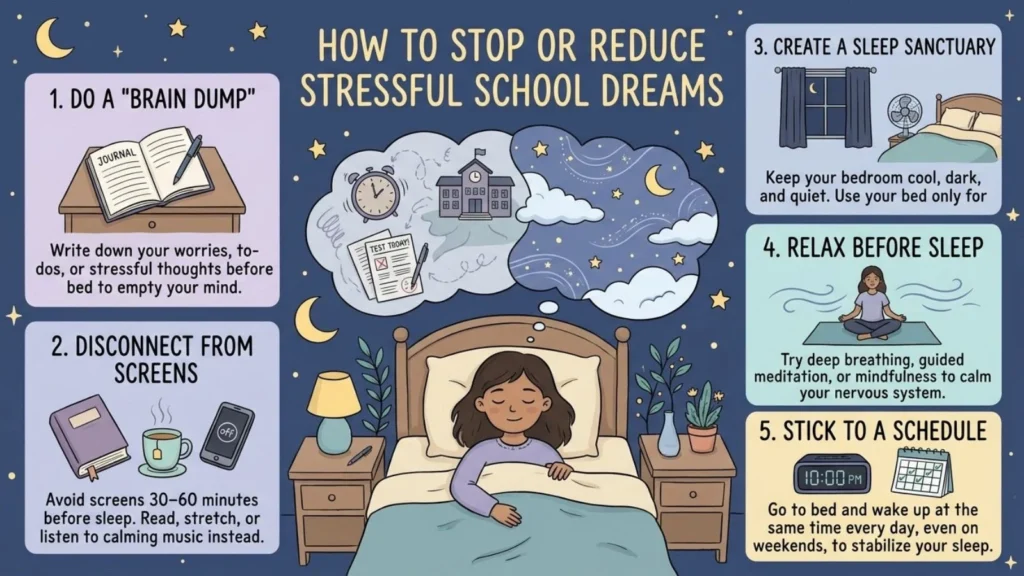
Keep a consistent bedtime and wake time, and make your bedroom cool, dark, and quiet. Irregular or insufficient sleep can make dreams more vivid and disturbing.
Practice relaxation before bed
Slow breathing, gentle stretching, progressive muscle relaxation, or a short meditation can calm the nervous system. A mind that goes to bed tense is more likely to produce tense dreams.
Address the waking-life stressor
Since school dreams usually reflect real pressure, tackling the source often works best. Break the overwhelming task into small steps, ask for help, or have the difficult conversation you’ve been avoiding.
Try Imagery Rehearsal Therapy
Used by clinicians to treat recurring nightmares, this technique has you rewrite the dream’s ending while awake. For example, imagine calmly walking into the exam, finding you know the answers, or simply leaving the room. Rehearse the new version for a few minutes each day. Over time, it may change how the dream unfolds.
Limit caffeine, alcohol, and screens at night
Caffeine late in the day, alcohol close to bedtime, and bright screens can all disrupt sleep and fragment your dream cycles. Try winding down at least an hour before bed.
Journal your worries before sleep
Spend five to ten minutes writing down tomorrow’s tasks and anything weighing on you. Getting concerns onto paper can keep them from replaying in your dreams.
When to Seek Professional Help
Most school dreams are harmless, and many fade on their own. Sometimes, though, they signal something that deserves more support than a dream journal can offer. Consider reaching out if any of the following apply.
Frequent or sleep-disrupting nightmares
If distressing dreams occur several times a week, wake you repeatedly, or leave you afraid to go to sleep, they may be affecting your rest and overall health. Ongoing sleep loss can worsen mood, focus, and stress, which can in turn feed more nightmares.
Dreams tied to trauma or bullying
If your dreams replay real experiences of bullying, humiliation, or abuse from school, they may be connected to unresolved trauma. Intense dreams combined with flashbacks, intrusive memories, or strong reactions to reminders could point to post-traumatic stress. A trauma-informed therapist can help process these experiences safely.
Anxiety or depression affecting daily life
When dreams come with constant worry, low mood, loss of interest, irritability, or trouble functioning at work or home, the dream may be one symptom of a bigger picture. Treating the underlying anxiety or depression often eases the dreams as well.
Who can help
- A therapist or counselor: especially one trained in cognitive behavioral therapy (CBT) or trauma-focused approaches
- A sleep specialist: helpful if nightmares come with insomnia, daytime exhaustion, or suspected sleep disorders
- Your doctor: useful for ruling out medication effects, medical causes, or substance-related sleep disruption
Seeking help is not an overreaction. It’s a practical step, much like seeing a doctor for a persistent cough. If you ever feel overwhelmed or unsafe, contact a mental health professional or a local crisis line right away.
Myths and Misconceptions About School Dreams
Dream interpretation attracts plenty of folklore. Here are three common myths worth setting straight.
Myth 1: “School dreams predict failure”
Reality: Dreaming that you failed an exam does not mean you will fail at anything in real life. These dreams reflect how you feel, not what will happen. In fact, people who have them are often high achievers who care deeply about doing well. A failing grade in a dream is more likely a sign of pressure or perfectionism than a forecast.
Myth 2: “Every dream has one fixed meaning”
Reality: The same dream can mean different things to different people. An exam dream might signal work stress for one person and fear of judgment for another. Your emotions, memories, culture, and current circumstances all shape what a symbol means to you. Any interpretation, including those in this guide, is a starting point for reflection rather than a final answer.
Myth 3: “Dream dictionaries are always accurate”
Reality: Dream dictionaries offer quick, general definitions, but they can’t account for your personal associations. A teacher might represent comfort to one dreamer and fear to another, and no dictionary can tell the difference. Treat them as one source among many, and trust your own reactions above any list.
A Few Bonus Misconceptions
- “Only students have school dreams.” Adults of all ages and professions have them.
- “Recurring dreams mean something is wrong with you.” They usually mean a stressor or emotion hasn’t been addressed yet.
- “You can fully control your dreams.” You can influence them through sleep habits and stress management, but not completely.
The healthiest approach is curious and flexible. Treat your dream as a conversation starter with yourself, not a prophecy or a diagnosis.
Frequently Asked Questions
Why do I still dream about school as an adult?
School is where we first learned what it feels like to be graded and compared. Whenever adult life feels like a test, your brain borrows that familiar setting to express the pressure.
What does it mean to dream of failing an exam?
It usually reflects self-doubt, fear of judgment, or perfectionism rather than a prediction of failure. Consider where you feel evaluated right now.
Why am I always late in my school dreams?
Lateness often signals feeling behind in life or worrying that you’re missing an opportunity. It tends to appear during busy, demanding periods.
Is dreaming about school a bad sign?
No. Most school dreams are normal and harmless. They point to stress or growth, not bad luck, and positive versions can signal confidence and readiness.
What does it mean to dream of high school repeatedly?
Repeated high school dreams may suggest unresolved emotions from that time, or current situations that echo its social dynamics. Look for the feeling that repeats.
What does it mean to dream of being back in school but not knowing your schedule?
Not knowing your schedule or classroom in a school dream often points to feeling unprepared or uncertain about a current role or decision. It can reflect imposter syndrome or a transition where the rules are still unclear. The dream usually invites you to slow down, prepare what you can, and trust that you can learn as you go.
Related Dream Meanings
Conclusion
School dreams can feel unsettling, but they’re rarely a cause for alarm if you’re racing to a final exam, wandering lost hallways, or sitting in a classroom as a grown adult, the dream is usually pointing to pressure, growth, or unfinished business in your waking life.
The most important takeaway is that your emotions matter more than the scenery. Ask what you were feeling, where that feeling shows up in your life right now, and what it might be asking you to notice.
Start a dream journal, look for patterns, and give yourself credit for caring so much about doing well.
If the dreams become frequent or distressing, remember that support is available, and small changes to your sleep and stress habits can make a real difference.

Ernest Hartmann is a dream researcher and author known for his work on dreams and their meanings.
At DreamHatchs.com, we explore dream symbolism and interpretations to help readers better understand their dreams.








1 thought on “School Dream Meaning: Messages From Your Subconscious”