You’re tumbling through the air, the ground rushing toward you, your stomach dropping, and then you jolt awake, heart pounding, gripping the sheets.
If you’ve ever experienced this, you’re far from alone. Falling is one of the most common dream experiences people report, and it’s also one of the most unsettling.
This is the falling in dream meaning: your subconscious is showing you where you feel out of control.
So what is the falling in a dream meaning? The answer isn’t a single one. Sometimes it’s simply your body relaxing into sleep.
Other times it’s your mind processing stress, anxiety, or a feeling that life is slipping out of your control. Many spiritual traditions see it differently still, as a message about surrender and change.
In this guide, we’ll explore the science behind falling dreams, their psychological and spiritual meanings, what different scenarios can reveal, and practical ways to stop them. By the end, you’ll be able to decode what your own dream is trying to say.
The Science Behind Falling in Dream Meaning

Before looking at symbolism, it helps to know what is happening in your body and brain. Many falling dreams have a physical explanation as well as an emotional one.
Hypnic Jerks (Sleep Starts)
As you drift off, your muscles relax and your breathing and heart rate slow. Sometimes the brain misreads this shift as a sign that you are actually falling, and it fires off a sudden muscle contraction. This is called a hypnic jerk, or sleep start. You may feel your leg kick or your body jolt, and your mind can instantly invent a falling scene to explain the sensation. That is why many people wake with a start just before “hitting the ground.”
Sleep Stages and Dreaming
Dreams happen mostly during REM sleep, when the brain is highly active and the body is temporarily paralyzed. Falling dreams can also occur in the lighter transition into sleep, when you are half awake and half dreaming. In both cases, the brain stitches together sensations, memories, and emotions into a story, and a falling storyline is a common result.
Physical Triggers
Certain factors make falling dreams and sleep starts more likely:
- Stress and anxiety: High stress hormones keep the nervous system on alert.
- Caffeine and stimulants: Late-day coffee or energy drinks can disrupt the shift into sleep.
- Sleep deprivation and irregular schedules: Exhaustion makes sleep starts more intense.
- Intense exercise close to bedtime: The body may stay too activated to relax smoothly.
- Sleep disorders and some medications: These can fragment sleep and intensify dreams.
Understanding these triggers is the first step. If your falling dreams stop when your habits improve, the cause was likely physical rather than symbolic.
Psychological Meanings of Falling Dreams
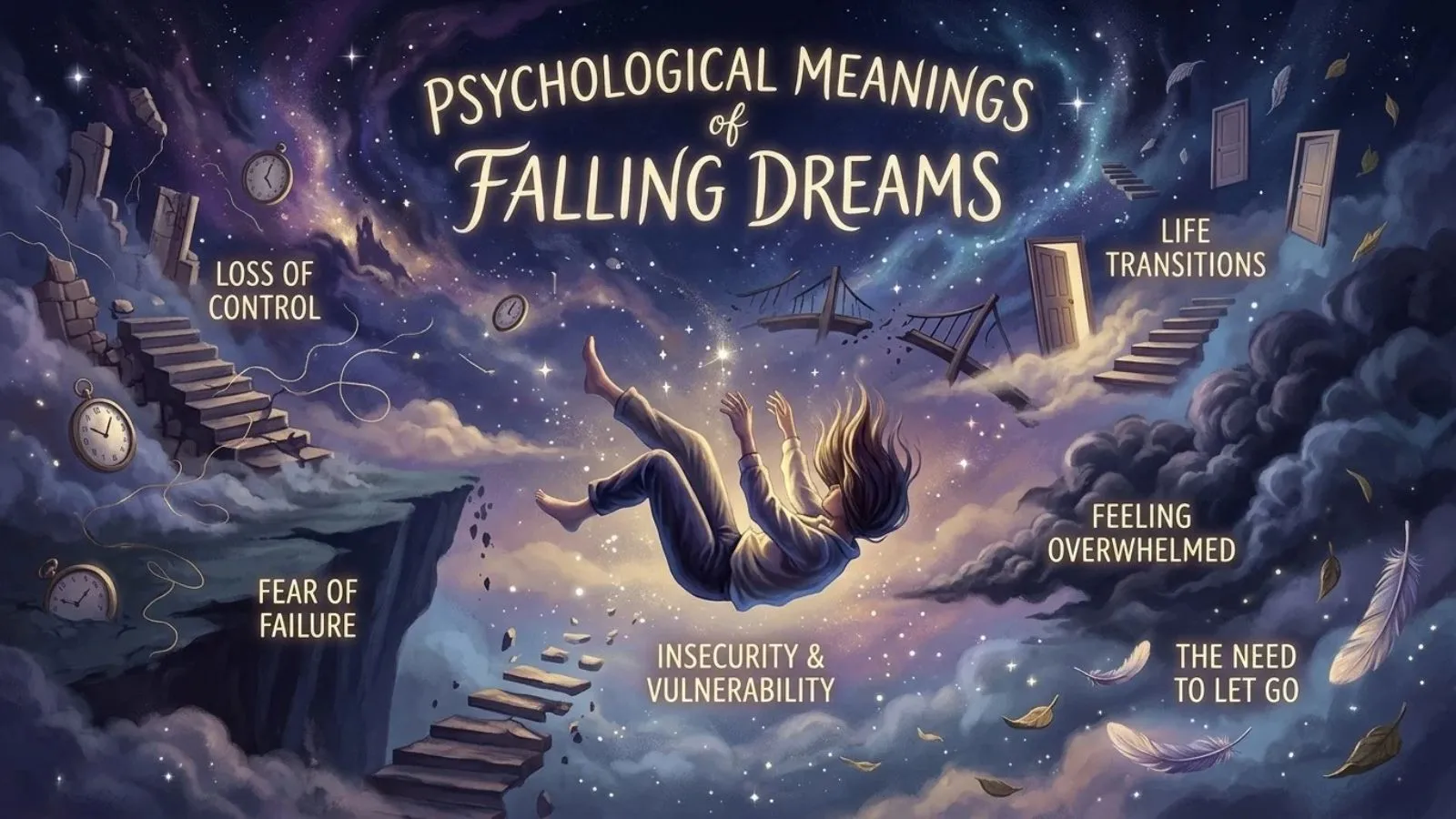
When a falling dream has no physical trigger, psychologists often look to your emotional life. Falling is a powerful symbol because it captures the feeling of losing your footing, and the meaning usually depends on what is happening in your waking life.
Loss of Control
The most common interpretation is a sense that something in your life is slipping away. A demanding job, a strained relationship, or a financial worry can leave you feeling you have no firm ground to stand on.
Anxiety and Overwhelm
Falling dreams often appear during periods of high stress. The dream mirrors the feeling of being pulled down by pressure, with no way to slow the descent.
Fear of Failure or Rejection
If you are facing an exam, a promotion, or a big decision, falling can represent the fear of failing publicly or falling short of expectations.
Insecurity and Lack of Support
Falling with nothing to grab onto may reflect a feeling that you are on your own, or that the people and systems you rely on cannot catch you.
Major Life Transitions
A move, a breakup, a new job, or a new baby can trigger dreams of falling, since change often feels like stepping into the unknown.
Views of Major Thinkers
- Freud linked falling dreams to repressed desires and anxiety, often tied to loss of status or giving in to temptation.
- Jung saw them as a signal from the unconscious that the ego has become too rigid or inflated and needs to come back to earth.
- Modern theories suggest dreams help us rehearse threats and process emotions, so a falling dream may be your brain practicing how to cope with fear.
No single theory fits everyone. The most reliable guide is your own context: ask what in your life currently feels unstable, and the dream’s message often becomes clear. The falling in dream meaning always depends on your own context.
Falling Dream Scenarios and Their Meanings
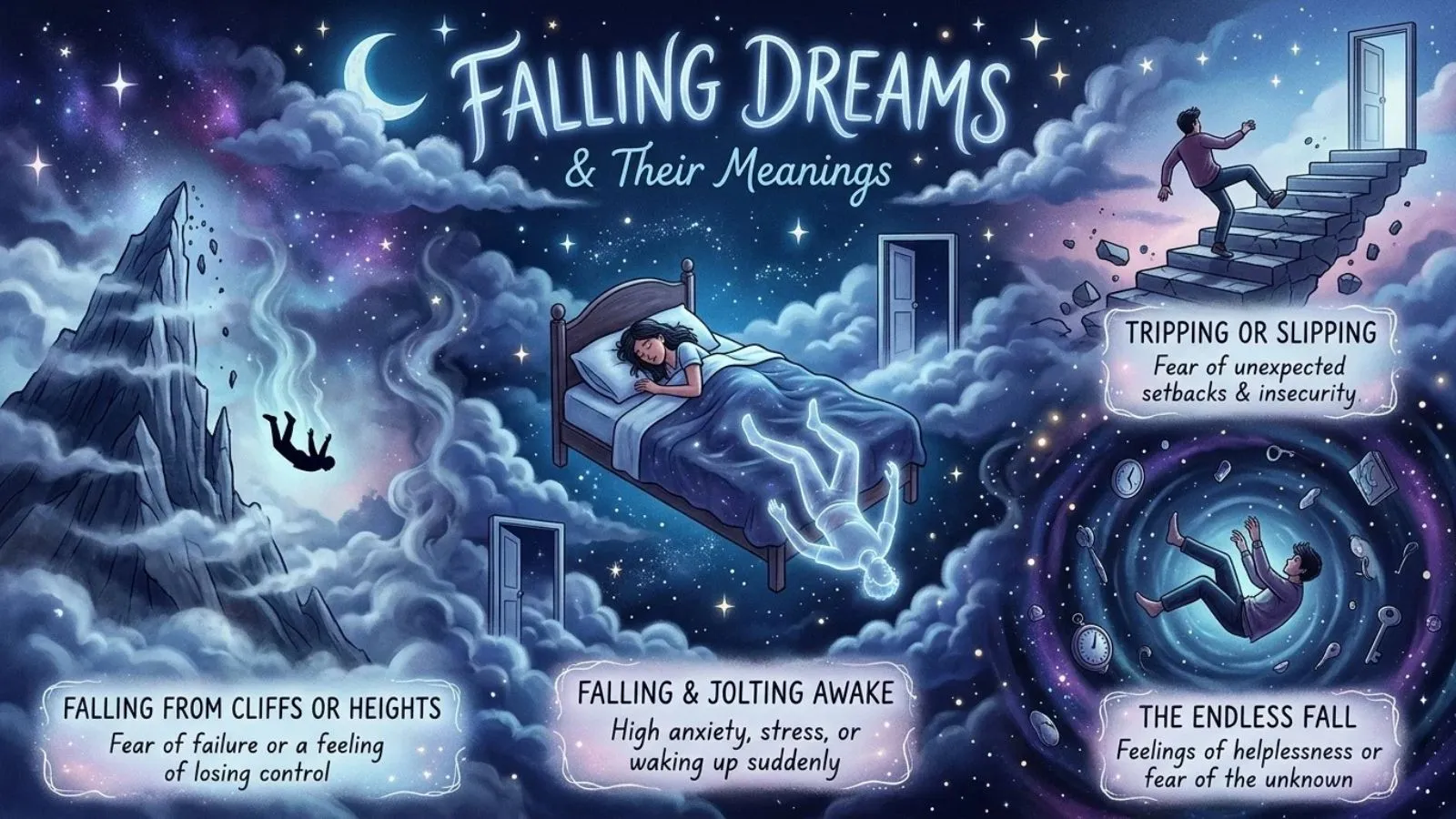
The details of your dream can shift its meaning. Here are the most common scenarios and what each may suggest.
Falling from a Great Height
Dreaming of falling from a cliff, building, or bridge often points to a fear of losing status, security, or control. The greater the height, the more you may feel you have to lose.
Falling Down Stairs
This can signal a setback, a step backward in your goals, or worry that you are not making progress as planned.
Falling into Water
Water often represents emotion. Falling into it may mean you are being pulled into feelings you have avoided. If the water feels calm, it can suggest emotional release.
Falling into a Hole or Darkness
This scenario is linked to fear of the unknown, depression, or a sense of being trapped by circumstances.
Falling from the Sky or a Plane
It may reflect ambitions that feel out of reach, or anxiety about a situation you cannot steer.
Falling but Never Landing
An endless fall suggests ongoing uncertainty or a problem that feels unresolved, with no end in sight.
Waking Before Impact
This is the classic version. It often reflects a stress response, and it can be physical, as with a hypnic jerk.
Landing Safely or Flying
If you land softly or begin to fly, the dream may signal resilience and growing confidence in handling change.
Falling in a Vehicle
Falling in a car or elevator suggests a loss of direction or control over where your life is heading.
Someone Else Falling
Watching a loved one fall can reflect worry for them, or fear of being unable to help.
Tripping in Public
This usually relates to embarrassment and a fear of being judged.
Spiritual and Cultural Interpretations

Beyond science and psychology, many traditions treat falling dreams as meaningful messages. These views are interpretations, not proven facts, and they vary widely between cultures and even between scholars within the same faith.
Release of the Ego
In many spiritual circles, falling represents letting go of ego, pride, or the need to control. The dream may invite you to surrender and trust the process, even when the outcome feels uncertain.
A Warning or Call to Change
Some interpretations see a fall as a nudge to reconsider your direction. It may point to a decision, habit, or relationship that is no longer serving you.
Spiritual Awakening
Others view falling as a sign of transformation. Just as a seed must drop before it grows, the dream can signal an old chapter ending and a new one beginning.
Religious and Cultural Views
- Islamic tradition: Dream interpretation has a long scholarly history. Falling is often read in relation to one’s spiritual standing or worldly circumstances, and interpretations depend heavily on the dreamer’s situation and who is interpreting.
- Christian tradition: Falling may be linked to humility, temptation, or a need to rely on faith. Many Christians read it as a prompt for reflection rather than a prediction.
- Hindu and Buddhist traditions: Falling can symbolize detachment, impermanence, or release from attachment.
- Native and folk traditions: Some communities view dreams as messages from ancestors or the spirit world, with falling signaling a need to reconnect with grounding values.
Folklore and Superstition
Old folk beliefs claim that falling dreams foretell bad luck, or that you will die if you hit the ground. There is no evidence for either. These ideas endure mainly because the sensation is so vivid.
Emotions and Details That Change the Meaning

Two people can dream of falling and receive very different messages. The small details are often the key to a more accurate interpretation.
Your Emotions While Falling
How you feel matters more than the fall itself.
- Fear or panic: This usually points to anxiety or a real-life situation that feels out of control.
- Calm or acceptance: You may be ready to let go of something or trust a coming change.
- Excitement or thrill: This can suggest a willingness to take risks or embrace the unknown.
Who Is With You
Falling alone may reflect isolation or self-reliance. Falling with someone else can point to a shared problem, such as a relationship or a family worry. If someone catches you, it may signal that you have more support than you realize.
Setting, Color, and Time of Day
A fall at night or into darkness often connects to uncertainty or fear. A fall through a bright sky may feel lighter and suggest freedom or opportunity. Familiar places, such as your childhood home or workplace, can tie the dream to a specific area of your life.
How the Dream Ends
The ending offers important clues. Waking in fear suggests unresolved stress. Landing safely points to resilience. Floating or flying hints at growing confidence. Never landing can signal a problem that feels unresolved.
Your Current Life Situation
This is the most important detail of all. A falling dream during a job change means something different than one during a breakup or a health scare. Ask yourself: what in my life feels unsteady right now? Your honest answer often explains the dream better than any dictionary.
Recurring Falling Dreams

A single falling dream is usually nothing to worry about. When the same dream returns again and again, though, it is worth paying attention.
Why Falling Dreams Repeat
Recurring dreams often appear when something in your life remains unresolved. The mind keeps returning to the same scene because the underlying issue has not been addressed. A stressful job, a difficult relationship, or a lingering fear can all keep the dream cycle going until you deal with the cause.
Physical factors can also play a role. Poor sleep habits, irregular schedules, and frequent hypnic jerks can make the sensation of falling a repeating pattern, even without a deeper emotional meaning.
What Recurring Dreams May Signal
Repeated falling dreams often point to ongoing stress, a persistent feeling of instability, or a major change you have not fully processed. Notice when the dream returns. If it appears before big events, such as exams, presentations, or family gatherings, it may be tied to anticipation and pressure. If it shows up during quiet periods, it may reflect something you have been avoiding.
Links to Anxiety, Burnout, and Trauma
Frequent nightmares, including falling dreams, are sometimes associated with anxiety, burnout, or past trauma. This does not mean your dream is a diagnosis. Many healthy people have recurring falling dreams. However, if the dreams are intense, leave you afraid to sleep, or come with daytime worry, low mood, or flashbacks, it is wise to talk with a professional.
What You Can Do
Start by tracking the pattern. Keep a dream journal and note what is happening in your life each time the dream appears. Often, once you identify the trigger and take steps to address it, the dream fades on its own.
How to Interpret Your Own Falling Dream (Step-by-Step)

Dream dictionaries can only take you so far. The most accurate interpretation comes from your own life, and this simple process will help you find it.
Step 1: Write It Down Immediately
Dreams fade within minutes of waking. Keep a notebook or a notes app beside your bed and record everything you remember: where you fell from, what you saw, who was there, and how it ended. Even fragments are useful.
Step 2: Note Your Emotions
Ask yourself how you felt during the dream, not just when you woke up. Fear, calm, and excitement point to very different meanings. Your emotional response is often the strongest clue.
Step 3: Connect It to Current Life Events
Look at the past few days and weeks. Are you facing a deadline, a conflict, a decision, or a change? Falling dreams often echo the area of life that feels least stable.
Step 4: Look for Patterns
Compare the dream with earlier ones. Does it appear at certain times, such as Sunday nights or before work events? Do the same details keep returning? Patterns reveal triggers that a single dream cannot.
Step 5: Choose the Most Fitting Meaning
Review the interpretations in this guide, whether physical, psychological, or spiritual, and pick the one that feels most true to your situation. There is no single correct answer, and the best interpretation is the one that gives you insight you can act on. The falling in dream meaning that fits your life is the right one.
A Quick Tip
If no explanation fits, the cause may simply be physical, such as a hypnic jerk or a poor night’s sleep. Not every dream needs a deep meaning.
How to Stop or Reduce Falling Dreams

You can’t fully control your dreams, but you can make falling dreams and sleep starts less frequent. Most of the fixes come down to calming your body and mind before bed.
Keep a Consistent Sleep Schedule
Going to bed and waking up at the same time each day helps your brain move smoothly into sleep. Irregular hours are one of the most common triggers for sleep starts.
Build a Calming Bedtime Routine
Spend the last 30 to 60 minutes before bed winding down. Dim the lights, read a book, take a warm shower, or listen to quiet music. Avoid stressful conversations and work emails.
Limit Caffeine, Alcohol, and Screens
Caffeine late in the day can keep the nervous system alert. Alcohol may help you fall asleep but fragments sleep later. Screens delay your body’s natural sleepiness, so try to put them away an hour before bed.
Manage Stress
Meditation, deep breathing, gentle stretching, and regular exercise (earlier in the day) all lower stress hormones. Writing down worries before bed can also keep them from following you into your dreams.
Try Dream Journaling
Recording your dreams helps you spot triggers and often reduces their emotional power over time.
Use Imagery Rehearsal
This technique, used for recurring nightmares, involves rewriting the dream ending while awake. Imagine yourself landing softly or flying, and rehearse that new version for a few minutes each day. Over time, the new ending can replace the old one.
Optimize Your Sleep Environment
Keep your bedroom cool, dark, and quiet, and use a comfortable mattress and pillow.
When to Seek Professional Help

Falling dreams are common and usually harmless. Sometimes, though, they signal something that deserves professional attention.
Signs It’s Time to Reach Out
Consider getting help if you notice any of the following:
- Frequent nightmares: Dreams that disturb your sleep several times a week or leave you afraid to go to bed.
- Daytime effects: Constant tiredness, trouble concentrating, or irritability caused by poor sleep.
- Signs of anxiety or depression: Ongoing worry, low mood, loss of interest in things you enjoy, or feeling hopeless.
- Trauma symptoms: Flashbacks, intense startle reactions, or dreams linked to a distressing past event.
- Sleep disorder symptoms: Loud snoring, gasping at night, frequent waking, or sleepwalking.
Who Can Help
- Your doctor: A good first stop to rule out medical causes and review any medications that may affect your sleep or dreams.
- A sleep specialist: Helpful for suspected sleep apnea, insomnia, or other sleep disorders, often through a sleep study.
- A therapist or counselor: Effective for anxiety, trauma, and recurring nightmares. Cognitive behavioral therapy and imagery rehearsal therapy are well-established approaches.
Don’t Wait Until It Feels Severe
Asking for help early is a sign of good self-care. Treating the underlying cause, whether stress, anxiety, or a sleep problem, often reduces the dreams as well. If you ever feel unsafe or are having thoughts of harming yourself, contact a local emergency service or crisis line right away.
A Note on This Article
This guide is for general information and is not a substitute for medical or psychological advice. A professional can look at your full situation and offer personalized support.
Myths vs. Facts About Falling Dreams

Falling dreams are surrounded by old beliefs and half-truths. Here are the most common ones, sorted from fiction to fact.
Myth: If You Hit the Ground in a Dream, You Die in Real Life
Fact: This is one of the most persistent dream legends, and it has no basis in evidence. People do hit the ground in dreams, survive, and wake up perfectly fine. The belief likely lingers because most people wake just before impact, which makes the moment feel like a near miss.
Myth: Falling Dreams Predict Bad Luck
Fact: There is no scientific support for dreams predicting the future. A falling dream is far more likely to reflect your stress levels, your sleep habits, or something on your mind than to forecast misfortune.
Myth: Every Falling Dream Means the Same Thing
Fact: Meaning depends on context. A fall caused by a hypnic jerk is physical, while a recurring fall during a career change may reflect anxiety. Your emotions, the details of the dream, and your current life situation all shape the interpretation. The falling in dream meaning is never one-size-fits-all.
Myth: Dream Dictionaries Give the Final Answer
Fact: Dictionaries offer helpful starting points, but they cannot know your life. The best interpretation connects the dream to your own experiences and feelings.
Myth: Falling Dreams Mean Something Is Wrong With You
Fact: Falling dreams are among the most common dreams people report. Having them occasionally is completely normal and does not signal a mental or physical problem.
Myth: You Can’t Do Anything About Them
Fact: While you can’t control dreams entirely, better sleep habits, stress management, and techniques like imagery rehearsal can reduce how often they occur.
Frequently Asked Questions
Is dreaming of falling normal?
Yes. Falling dreams are among the most common dreams people report. Having them occasionally is normal and usually reflects stress, sleep habits, or a harmless sleep start rather than a problem.
Why do I wake up right before I hit the ground?
This is often caused by a hypnic jerk, a sudden muscle twitch as your body relaxes into sleep. Your brain may also trigger a stress response at the peak of the fall, which wakes you before impact.
Is a falling dream a bad omen?
No. There is no evidence that dreams predict the future. Falling dreams more often mirror stress, uncertainty, or changes in your life than they warn of bad luck. This is the falling in dream meaning: a reflection of stress, not a warning of bad luck.
What does falling in water mean?
Water often symbolizes emotion. Falling into it may suggest you are being pulled into feelings you have avoided. Calm water can signal release, while rough water may point to feeling overwhelmed. That is the falling in dream meaning for water: emotions asking for attention.
Can anxiety cause falling dreams?
Yes. High stress and anxiety keep the nervous system alert, which can make sleep starts and falling dreams more likely. Managing stress often reduces them. The falling in dream meaning here is an alert nervous system.
Do falling dreams mean something spiritually?
Some traditions see falling as a sign of surrender, ego release, or a call to change direction. These are interpretations rather than proven facts, and they vary between cultures and individuals. In other words, the falling in dream meaning here is surrender, ego release, or a call to change direction.
How do I stop falling dreams?
Keep a consistent sleep schedule, limit caffeine and screens before bed, manage stress, and try imagery rehearsal, where you rewrite the dream ending while awake. If the dreams persist or disturb your daily life, consider speaking with a doctor or therapist.
Conclusion
Dreaming of falling can feel alarming, but it is rarely a sign that something is wrong. Sometimes it is simply your body relaxing into sleep this is the falling in dream meaning at its simplest: a normal response to relaxing into sleep.
Other times it is your mind processing stress, uncertainty, or a life change that has left you feeling unsteady.
And for many people, it carries a deeper spiritual message about letting go and trusting the path ahead. This is the falling in dream meaning: stress finding a shape in your dreams.
The key is context. Your emotions in the dream, the details of the fall, and what is happening in your waking life all shape its meaning. The falling in dream meaning is always shaped by context.
Use the steps in this guide to journal your dreams, spot patterns, and build healthier sleep habits. If the dreams become frequent or distressing, a doctor or therapist can help. The falling in dream meaning becomes clearer as you track your patterns.