
You wake up with a tight chest, a damp pillow, or a heaviness you can’t quite explain. In the dream, you were crying, and the emotion felt completely real. Now you’re left wondering what it means.
If that sounds familiar, you’re not alone. Crying dreams are surprisingly common, and they aren’t automatically a bad sign.
The crying dream meaning depends heavily on context. The same dream can point to emotional release, unresolved grief, or even healing, depending on who was there, how you felt when you woke up, and what’s happening in your life right now.
In this guide, you’ll learn why we cry in dreams, the most common psychological and spiritual interpretations, what specific scenarios may reveal, and when it’s worth paying closer attention. By the end, you’ll also have a simple framework for decoding your own dream.
Quick Answer: What Does It Mean to Cry in a Dream?

Short answer: Crying in a dream usually reflects emotional processing. It can point to stress, grief, suppressed feelings, or relief, and the meaning depends on how you felt during the dream and what’s happening in your waking life.
Crying in a dream is rarely a prediction or a warning. Most dream researchers see dreams as a reflection of what’s on your mind, so tears while you sleep often mirror feelings you’re carrying while awake, even ones you haven’t fully acknowledged.
The most common meanings include:
- Emotional release: letting go of built-up tension or sadness
- Unresolved grief: loss or longing that hasn’t fully settled
- Stress or overwhelm: your mind working through pressure
- Suppressed feelings: emotions you avoid during the day
- Relief or healing: closure after a difficult period
A helpful clue is how you felt when you woke up. If you felt lighter or calmer, the dream may have helped you release something. If you felt heavy, sad, or anxious, it may be pointing to feelings that deserve more attention.
Context matters just as much as the crying itself. Who was with you, what caused the tears, and what’s going on in your life right now can change the interpretation completely. Someone crying at a funeral in a dream while grieving has a very different experience from someone crying happy tears after a stressful month.
Why Do We Cry in Dreams? The Science and Psychology

Dreams and Emotional Processing
Scientists still debate why we dream, but many believe dreaming helps the brain process emotions. Vivid dreams most often occur during REM sleep, when brain areas linked to emotion, such as the amygdala, are highly active. Some research suggests this stage helps us work through emotional memories, which may explain why feelings like sadness can surface so intensely at night.
What Psychologists Say
Different schools of thought offer different explanations:
- Freud viewed dreams as a window into repressed emotions and unspoken wishes.
- Jung saw them as messages from the unconscious, often using symbols to highlight what we overlook while awake.
- The continuity hypothesis, a modern view, suggests dreams reflect our waking concerns, so stress, grief, and relationships naturally show up in them.
Crying Without Feeling Sad
You can cry in a dream without feeling sad in real life. Dream emotions don’t always match waking ones, and tears may simply signal built-up tension finding a release, even when you can’t name its source.
Why Some People Cry in Dreams More Often
Certain factors can make emotional dreams more frequent or vivid:
- Chronic stress, anxiety, or depression
- Grief or major life changes
- Poor or fragmented sleep
- High emotional sensitivity
- Some medications, which can affect dream intensity
None of this means something is wrong with you. Crying in dreams is a common human experience, and it often shows your mind is doing its emotional housekeeping.
Common Meanings of Crying Dreams

Crying dreams rarely carry just one message. Here are the ten most common interpretations, along with a question to help you connect each one to your own life.
Before going through the list below, it helps to settle one basic question: what is the meaning of dreams crying, in general? The dream meaning of crying is rarely about the tears themselves — it is about what your mind is processing while you sleep, whether that is grief, stress, relief, or feelings you have pushed aside during the day. In short, the dream meaning crying carries is emotional release, and a good dream interpretation crying approach is to match the feeling in the dream to something unresolved in your waking life, then read the ten meanings below with that feeling in mind.
1. Emotional release and catharsis. Tears can signal that you’re letting go of tension you’ve been holding. Ask yourself: Did I feel lighter when I woke up?
2. Unresolved grief or loss. Missing someone or something, even long after the loss, can surface as tears in sleep. Ask: Is there a loss I haven’t fully mourned?
3. Stress, burnout, or overwhelm. When your workload or responsibilities pile up, your mind may process the pressure through emotional dreams. Ask: Where do I feel stretched too thin?
4. Suppressed emotions. Feelings you avoid during the day can show up when your guard is down. Ask: What have I been pushing aside?
5. Relief and closure. Not all tears are sad. Crying can mark the end of a difficult chapter. Ask: Has something recently ended or been resolved?
6. Fear of change. Big transitions like a move, a new job, or a breakup can trigger emotional dreams. Ask: What uncertainty am I facing?
7. Loneliness or longing. Crying may reflect a need for connection or support. Ask: Do I feel truly seen by the people around me?
8. Guilt, regret, or shame. Dreams can revisit decisions or words you wish you could undo. Ask: Is there something I need to forgive myself for or make right?
9. Healing and growth. Crying can show you’re finally facing painful feelings, which is often a step toward recovery. Ask: Am I becoming more honest with myself lately?
10. Feeling unheard or powerless. Tears may reflect frustration when you can’t express yourself or influence a situation. Ask: Where do I feel my voice isn’t being heard?
Crying Dream Scenarios and Their Meanings

The details of your dream shape its meaning. Here are the most common scenarios.
Who You Cry About
- A loved one who died: Often reflects grief, longing, or unfinished business. These dreams can feel comforting or painful, and both reactions are normal.
- An ex or a breakup: Usually points to lingering feelings or a need for closure. It may be about what the relationship represented, not the person.
- A family member or friend: May reflect worry, tension, or a strained bond.
Types of Crying
- Sobbing uncontrollably: Intense, built-up emotion looking for an outlet.
- Silent tears, or being unable to cry: Feeling emotionally blocked or unable to express yourself.
- Happy tears: Relief, gratitude, or a sense of resolution.
Setting and Context
- At a funeral: Rarely a prediction of death. It more often symbolizes an ending, a change, or grief.
- Crying in public: May reveal a fear of vulnerability or being judged.
- Alone vs. comforted: Crying alone can suggest isolation, while being comforted may show you’re open to support, or already receiving it.
When Someone Else Is Crying
A crying parent, partner, or friend may reflect concern for them, or your own feelings projected onto them. A crying child or baby often symbolizes a vulnerable part of yourself that needs care. If someone cries because of you, the dream may be touching on guilt or a need to make amends.
Waking Up Crying
Waking with tears or a lingering heavy mood is common after emotionally intense dreams. If it happens occasionally, it’s usually normal. If it happens often or alongside ongoing distress, it’s worth paying closer attention and considering support.
Spiritual and Cultural Interpretations

For thousands of years, people have treated dreams as more than random brain activity. Many traditions see tears in dreams as meaningful, though interpretations vary widely between communities and teachers.
Common Spiritual Themes
Across traditions, tears often symbolize cleansing, renewal, and release. Crying in a dream may be read as the soul letting go of a burden, making space for peace or a fresh start.
Religious Perspectives
- Christian: Scripture often links tears with repentance, comfort, and eventual joy. Some believers read a crying dream as a call to pray, forgive, or seek reconciliation.
- Islamic: Popular dream interpretation texts, often attributed to scholars such as Ibn Sirin, are commonly cited as treating quiet tears as a sign of relief or good news, and loud wailing as a sign of distress. These readings are traditional and not universally agreed upon.
- Hindu: Dream interpretation appears in traditional texts and folk practice, where tears may be seen as emotional purification or the release of heavy feelings. Meanings differ by region and teacher.
Folk Beliefs and Cultural Symbolism
Many cultures see water as a symbol of emotion and purification, so tears in dreams naturally carry themes of healing. Some folk traditions treat crying dreams as omens, which varies so much from place to place that no single meaning can be called universal.
A Balanced View
These perspectives can offer comfort and a sense of meaning, but they are interpretive traditions, not scientific facts. The psychological explanation, that dreams reflect your emotions and experiences, is the most evidence-informed. You can hold both: use spiritual readings for reflection, and your real-life circumstances to understand what the dream is saying.
Good Sign or Bad Sign?

It’s the question most readers ask first: is crying in a dream a good omen or a bad one? The honest answer is that it’s neither. A crying dream is better understood as information than as a prediction.
If you are asking is crying in dream good or bad, the crying in dream meaning is usually neither — it is your mind releasing pressure. Tears in a dream often mean relief is already on its way, so a crying dream can be a good sign that you are finally letting go of something heavy.
When It Points to Healing and Growth
Crying dreams can be a healthy sign. If you wake up feeling lighter, calmer, or relieved, your mind may have released something it was holding onto. Tears can also show that you’re finally facing feelings you’ve avoided, which is often an early step toward healing. In this sense, the dream is doing useful emotional work.
When It Flags Unprocessed Pain
Other times, a crying dream may highlight something that still needs attention. If you wake up heavy, anxious, or drained, or if the dream keeps returning, it may point to unresolved grief, ongoing stress, or feelings you haven’t had space to express. That isn’t a bad sign so much as a signal worth listening to.
Why “Omen” Thinking Isn’t Helpful
Many people worry that a crying dream predicts loss, bad news, or something terrible happening. There’s no scientific evidence that dreams foretell the future. Treating them as omens can add needless anxiety, especially if you’re already feeling vulnerable.
A more useful approach is to ask:
- What was I feeling in the dream, and when I woke up?
- What’s been weighing on me lately?
- Is there something I’ve been avoiding or holding in?
Answering these turns a vague worry into something you can act on, whether that means journaling, talking to someone you trust, or simply giving yourself more rest.
So rather than asking whether the dream was good or bad, ask what it’s trying to show you. That question is almost always more helpful.
How to Interpret Your Own Crying Dream

Since the meaning of a crying dream depends on your personal context, the best interpreter is you. This simple seven-step framework can help.
1. Write it down immediately. Dreams fade fast. Keep a notebook or notes app by your bed and record everything you remember, even fragments.
2. Identify the dominant emotion. Note how you felt in the dream and how you felt on waking. Sadness, relief, fear, and guilt point in very different directions.
3. Note people, places, and objects. Who was there? Where were you? Familiar settings and faces often connect to specific relationships or memories.
4. Connect it to your waking life. Think about recent stressors, conflicts, losses, or changes. Dreams often borrow material from the past few days or weeks.
5. Look for patterns. Check whether similar themes, people, or feelings appear across several dreams.
6. Ask what you may need to feel or release. The dream may be highlighting an emotion you haven’t given space to.
7. Choose one small action. That could be journaling, having an honest conversation, resting more, or reaching out for support.
5 Questions to Decode Your Crying Dream
- What was I crying about in the dream?
- How did I feel when I woke up: lighter or heavier?
- Who else was present, and what is my relationship with them?
- What is the biggest source of stress or emotion in my life right now?
- Is there something I’ve been avoiding, holding in, or not saying?
Keep in mind that no framework gives a single “correct” answer. The goal isn’t to crack a secret code but to understand yourself a little better. If an interpretation resonates and helps you take a helpful step, it’s doing its job.
Recurring Crying Dreams

Having the same crying dream again and again can feel unsettling, but it’s more common than you might think. Recurring dreams are often a sign that something in your waking life hasn’t been fully addressed.
Why Dreams Repeat
When an emotion or situation stays unresolved, your mind may keep returning to it. Many researchers link recurring dreams to ongoing stress, unmet emotional needs, or experiences that haven’t been fully processed. The details might change, but the feeling at the core, such as sadness, helplessness, or longing, usually stays the same.
Common Triggers
- Unresolved grief: a loss you haven’t had the time or space to mourn
- Ongoing conflict: a strained relationship or a difficult situation at home or work
- Trauma or past pain: memories that still carry emotional weight
- Chronic anxiety or stress: pressure that never fully lets up
- Major life changes: transitions that leave you feeling uncertain
How to Respond
Start by tracking the pattern. Note when the dream appears, what happened the day before, and how you feel afterward. Often, a clear link emerges, such as the dream returning during stressful weeks or around anniversaries.
From there, try these steps:
- Journal about it to give the emotion a place to go.
- Talk it through with someone you trust.
- Address the source by having the difficult conversation, setting a boundary, or allowing yourself to grieve.
- Reduce daily stress with movement, rest, and calming routines.
Recurring dreams often fade once the underlying issue is acknowledged. If they continue for weeks, disturb your sleep, or come with persistent sadness or anxiety, consider speaking with a therapist or counselor. Support can make a real difference.
How to Cope and Process the Emotions Afterward

A crying dream can leave you feeling raw long after you wake up. These steps can help you settle your body and work through what surfaced.
Right After You Wake Up
- Breathe slowly. Try inhaling for four counts and exhaling for six to calm your nervous system.
- Ground yourself. Notice five things you can see, four you can touch, and three you can hear.
- Reorient. Remind yourself that it was a dream and that you’re safe.
- Write it down. A few lines in a journal can ease the emotional weight and capture useful details.
- Have some water and give yourself a few quiet minutes before checking your phone.
During the Day
Give the emotion somewhere to go instead of pushing it aside. Talking with a trusted friend, going for a walk, stretching, or doing something creative like drawing or music can help feelings move through you. If the dream stirred up grief, allow yourself to feel it rather than rushing to feel better.
Supporting Calmer Sleep
Your evening habits can influence how restful your nights feel:
- Keep a consistent bedtime and wake time.
- Limit caffeine in the afternoon and evening.
- Reduce screen time before bed.
- Try a wind-down routine such as reading, gentle stretching, or a warm shower.
- Avoid heavy meals and alcohol close to bedtime, since both can disrupt sleep.
Other Techniques
Some people find imagery rehearsal helpful for distressing recurring dreams. It involves rewriting the dream’s ending while awake and mentally practicing the new version. It works best with guidance from a therapist, especially if the dreams are tied to trauma.
Be patient with yourself. Processing emotions takes time, and a crying dream is often a sign that you’re working through something important.
When to Seek Professional Support
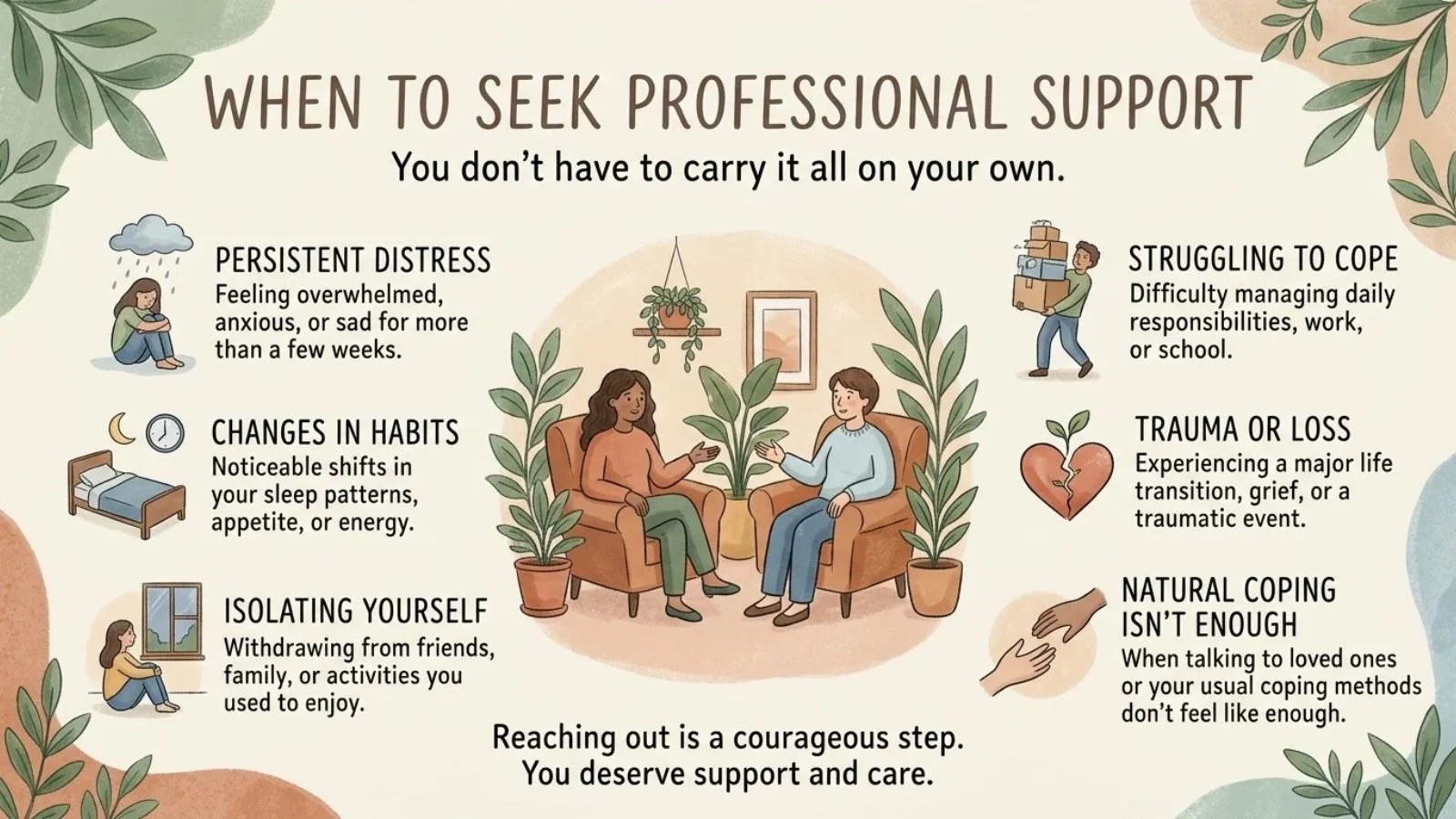
Most crying dreams are a normal part of processing emotions, and they don’t mean anything is wrong. But sometimes they signal that you could use more support than self-help can provide.
Signs It’s Time to Reach Out
Consider talking to a therapist, counselor, or doctor if you notice any of the following:
- Persistent sadness or hopelessness that lasts for weeks, even outside of your dreams
- Frequent or disturbing nightmares that regularly disrupt your sleep
- Dreams tied to trauma, especially if they come with flashbacks, panic, or intense fear
- Prolonged or complicated grief that isn’t easing with time
- Ongoing anxiety that affects your work, relationships, or daily routine
- Changes in sleep or appetite, or losing interest in things you usually enjoy
- Difficulty functioning because of exhaustion or emotional heaviness
What Support Can Look Like
Seeking help isn’t a sign of weakness. A therapist can help you work through grief, trauma, or chronic stress, and a doctor can check whether medications, sleep disorders, or health conditions are affecting your dreams and mood. Approaches such as grief counseling, cognitive behavioral therapy, and imagery rehearsal therapy have helped many people with distressing dreams.
You don’t need to wait until things feel unbearable. Reaching out early often makes it easier to feel better sooner.
If You’re in Crisis
If you are having thoughts of harming yourself or feel you are in immediate danger, please contact your local emergency number or a crisis service in your country right away. If you can, reach out to someone you trust and let them know what you’re going through. You don’t have to face it alone.
Myths vs. Facts About Crying Dreams

Crying dreams come with plenty of folklore attached. Here’s what’s worth believing and what isn’t.
Myth: Crying in a dream means someone will die.
Fact: There’s no scientific evidence that dreams predict death or any other event. A funeral or tears in a dream more often reflect grief, change, or an emotional ending in your own life. Some folk traditions treat these dreams as omens, but that’s belief, not evidence.
Myth: Dream meanings are universal.
Fact: A dream dictionary can offer ideas, but no symbol means the same thing for everyone. Your personal history, relationships, culture, and current stressors shape what a dream means to you. The same crying dream can signal relief for one person and unresolved grief for another.
Myth: Crying in a dream means you’re weak or emotionally unstable.
Fact: Crying dreams are common and are usually a healthy sign that your mind is processing emotions. Feeling deeply, even in your sleep, reflects emotional awareness, not fragility.
Myth: If you cry in a dream, you must be sad in real life.
Fact: Dream emotions don’t always match waking ones. You can cry in a dream while feeling fine during the day. The tears may point to buried tension, relief, or something you haven’t named yet.
Myth: A crying dream always has a hidden message you must decode.
Fact: Sometimes a dream is simply your brain sorting through the day’s leftover emotions. Not every dream needs a deep interpretation, and it’s okay to let some go.
Myth: Waking up crying means something is seriously wrong.
Fact: Occasionally waking with tears after an intense dream is normal. It’s worth seeking support only if it happens often, disrupts your sleep, or comes with ongoing sadness or anxiety.
Frequently Asked Questions
Is crying in a dream good or bad?
It’s neither. A crying dream is usually a sign of emotional processing, not a prediction. If you wake up lighter, it may reflect release or healing. If you wake up heavy, it may highlight feelings that need attention.
Why do I wake up crying from a dream?
Intense dream emotions can carry over into waking, sometimes with real tears or a racing heart. This is usually normal after an emotional dream. If it happens often or disrupts your sleep, consider talking to a professional.
What does it mean to cry in a dream about someone who died?
It most often reflects grief, longing, or unfinished emotional business. These dreams can be comforting or painful, and both reactions are natural. They don’t mean the person is sending a message, though some find spiritual meaning in them.
Why do I cry in dreams but not in real life?
You may be holding back emotions while awake, whether from busyness, habit, or fear of vulnerability. Dreams can give those feelings a safe outlet when your guard is down.
Can crying in a dream be a spiritual message?
Many traditions read tears in dreams as cleansing or renewal, and some people find that meaningful. These are interpretive beliefs rather than scientific facts, so use them for reflection alongside your real-life circumstances.
Do crying dreams mean I’m depressed?
Not necessarily. Most crying dreams are common and linked to everyday stress or emotion. However, if they come with persistent sadness, hopelessness, or loss of interest in daily life, speak with a doctor or therapist.
Why do I keep having dreams where I’m crying?
Recurring dreams often point to something unresolved, such as grief, ongoing stress, or conflict. Tracking when they appear and addressing the underlying issue can help them fade. If they persist, professional support can help.
Conclusion
Crying in a dream can feel unsettling, but it’s rarely a warning. More often, it’s your mind doing important emotional work, if that means releasing stress, processing grief, or finally giving a buried feeling room to breathe.
The key takeaway is that crying dream meaning is personal. The same tears can signal relief for one person and unresolved sadness for another, so context matters most: who was there, how you felt when you woke up, and what’s happening in your life right now.
Use the framework in this guide to listen to what your dream is showing you, and be gentle with yourself along the way.
If the dreams become frequent or distressing, or come with lasting sadness or anxiety, reaching out for support is a healthy next step.